Acquisition
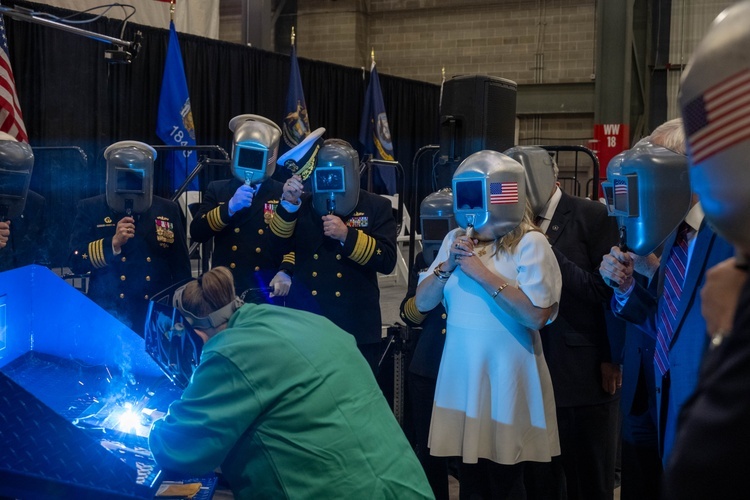
Chief of Naval Operations Adm. Lisa Franchetti watches as the initials of the ship's sponsor, Melissa Braithwaite, are ceremoniously welded into a piece of the keel, during the keel laying ceremony for the lead ship of the Constellation-class of guided-missile frigates USS Constellation (FFG 62), April 12, 2024. U.S. Navy photo by Chief Mass Communication Specialist Michael B. Zingaro)
After the Constellation-Class: Lessons of the Navy’s Latest Shipbuilding Debacle
Austin Gray, War on the Rocks
The cancellation of the Constellation-class guided missile frigate program by Secretary of the Navy John Phelan creates an opportunity for the Navy to implement immediate, sweeping reforms focused on people, processes, and design discipline.
- Design Maturity: To avoid persistant delays caused by unstable design, a completed functional design package must be mandated before construction starts.
- Requirements Control: The Navy suffers from an "insatiable appetite for requirements" that inflates unit costs for ships and drives unrealistic cost estimates. Requirements discipline must be enforced by someone empowered to say no.
- Golden Fleet Opportunity: President Trump is expected to announce a "Golden Fleet" plan, which offers hope for a course correction. The Navy should direct a flagship Golden Fleet program to Marinette Marine Shipyard to prevent the atrophy of critical shipbuilding capacity in Wisconsin.
- New Personnel Strategies: To deepen its pool of shipbuilding talent, the Navy should mandate industry tours for program managers and executive officers and utilize the reserve corps by standing up special units that draw on reservists' private sector expertise in shipbuilding and technology.
DoD’s plan to track contractor-held property is failing, putting 2028 audit goal at risk
Anastasia Obis, Federal News Network
According to a new Inspector General report, the Pentagon’s effort to correct its decades-old inability to reliably track government property held by contractors is failing, primarily because military components are slow to adopt the mandated Government Furnished Property (GFP) module and the Office of the Secretary of Defense lacks enforcement. This lack of progress puts at risk DOD's goal of achieving a clean audit opinion by 2028.
Full Report: Audit of DoD Efforts to Remediate Financial Statement Material Weaknesses Related to Government Property in the Possession of Contractors
FAR 2.0 Update: Part 15 – Contracting By Negotiation
Shane McCall, Small Government Contracts
The Revolutionary FAR Overhaul (FAR 2.0) has introduced one of its most substantial reorganizations in Part 15 (Contracting by Negotiation), which redefines meaningful exchanges, simplifies the procurement process, and grants Contracting Officers (COs) greater flexibility.
- Clarifications Redefined: The scope of "clarifications" is expanded, allowing COs to request additional information or documentation at any time after receiving proposals through contract award, regardless of whether a competitive range has been established.
- Flexible Negotiations Allowed: Although initial negotiations must be conducted with all responsible offerors in the competitive range, subsequent negotiation stages do not have to be equal for all offers. Furthermore, during negotiations, material elements such as pricing and intellectual property rights can be revised.
Practitioner Album: FAR Part 15 – Contracting By Negotiation
Defense & Strategy
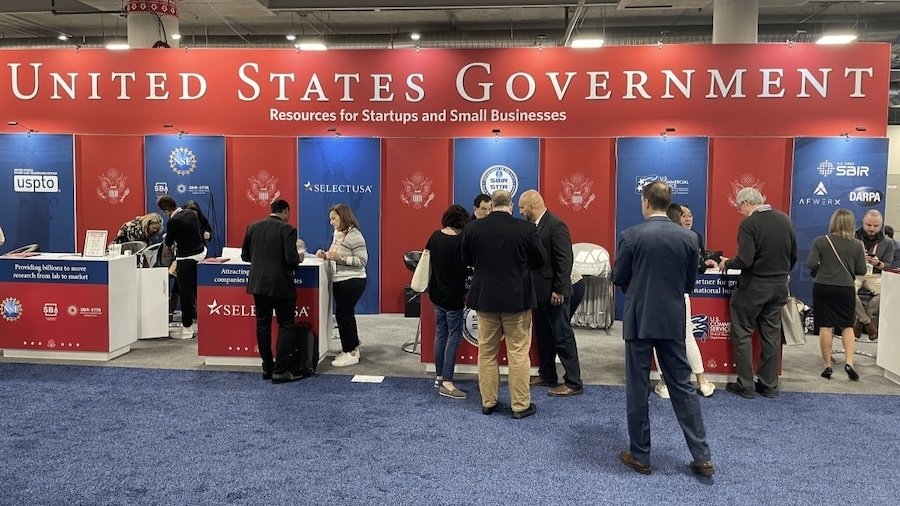
Image: Anne Neumann via Department of Defense Office for Small Business Innovation
Decades of Lost Potential in Defense Research and Development
Amanda Bresler, War on the Rocks
The Small Business Innovation Research (SBIR) program, created in 1982 to fund R&D for small businesses and transition critical technologies to government users, has been subverted by crippling bureaucracy and flawed size standards, instead acting as a taxpayer-funded subsidy for "SBIR mills" that dominate funding, stifle genuine innovation, and threaten U.S. national security.
- Incumbents Win Funding: The program fails to serve as an on-ramp for nontraditional companies, as less than 4 percent of the $4.8 billion in DOD Phase I funding awarded over the last 20 years went to companies with no prior federal experience.
- Poor Transition Rates: Data suggests that some mills transition technologies at a lower-than-average rate compared to companies with fewer awards.
- Reform Recommendations: To reorient the program, proposed reforms include: capping lifetime Phase I and Phase II funding at $75 million per firm; reserving a set portion of Phase I funding for new entrants; and implementing a size standard that limits qualifying firms to less than $40 million in annual revenue.
How Washington Is Losing the AI Race No One Is Tracking
Javaid Iqbal Sofi, War on the Rocks
The United States is losing a unnoticed competition in Artificial Intelligence (AI) due to a "documentation gap." American AI systems are being excluded from allied markets because they fail to meet mandatory foreign regulatory compliance requirements.
- Strategic Lock-In: Superior American technology is being locked out by allied regulatory hurdles. Once an allied nation begins a 15-to-20-year procurement cycle with a compliant competitor, a U.S. firm cannot win the contract, even with better algorithms.
- China Exploits Vacuum: While the U.S. promotes deregulation, China is exploiting the resulting compliance vacuum. Beijing explicitly positions regulatory compliance as a core export capability, evidenced by Huawei's expansion of its "Safe City" surveillance project in Serbia.
Commanding Minds: Naval Leadership in the Age of AI
Captain Mark Hagerott, U.S. Navy (Retired), Proceedings
As generative artificial intelligence and robotic machines accelerate technological change, the U.S. Navy must cultivate leaders who possess a deep technical knowledge alongside the operational understanding to integrate legacy systems with new technology.
- Three Adaptation Strategies: Historically, navies have responded to technological change using three main strategies: specialization (creating new non-command specialists), merger (combining groups of knowledge-holders), or a synthesis of both through focused education, training, and promotion practices.
- Specialization Risks: The Navy's current leadership structure - oriented around major platforms and officer specialization - may jeopardize the development of an adaptive strategy.
- Five AI Strategies: Drawing on historical examples of navies that successfully integrated new technology and maintained superior capability, the author offer five potential adaptive strategies for the age of intelligent machines.
Industry

iStock photo
JUST IN: McKinsey Warns of ‘Inventory Gridlock,’ Spare Parts Glut
Stew Magnuson, National Defense
The aerospace and defense industry currently holda $240 billion in spare parts inventory due to an overcorrection from "just-in-time" practices following COVID-19 supply chain disruptions. This problem, stemming from long-standing operational and planning challenges, risks costing the industry an additional $60 billion if immediate action is not taken to optimize operations and rebuild trust.
- Trust Deficit: Prime contractors doubt their suppliers’ delivery ability and set unrealistic production targets, while suppliers view customer forecasts as unreliable and hesitate to invest in capacity. This cycle means one party’s inefficiency becomes shared, eroding trust and undermining collaboration.
- AI Solution: Companies that successfully manage their inventories are using artificial intelligence (AI) to monitor supply and demand dynamics forensically.
Full Report: Fly high, stock higher: Managing A&D inventory to save $60 billion
Looking ahead: Enablers of innovation and scale for the future of Ukraine's defence-industrial base
Stuart Dee, Katja Fedina, et. al., RAND
Ukraine's defense-industrial base has established itself as a global leader in innovation, leveraging strengths like a skilled, combat-experienced workforce. But its long-term success is constrained by an unsustainable level of domestic defense spending and challenges in attracting Foreign Direct Investment (FDI). To ensure future success, Ukraine must transition to an export-driven model centered on its innovative capacity and skills, rather than relying solely on product exports.
Related: Tooling up together: How Europe and Ukraine can improve defence industrial collaboration
Related: From policy to victory: Recommendations to Ukraine for harnessing defence technology
Research

U.S. Airmen with the 735th Supply Chain Operations Group, carry buckets of water at Joint Base Langley-Eustis, Virginia, Mar. 9, 2023. (Airman 1st Class Mikaela Smith/U.S. Air Force via DVIDS
Building greater resilience and capacity in the US national security industrial base
Michael E. O’Hanlon, Marta E. Wosińska, Mark Muro, & Thomas Wright, Brookings Institution
This Brookings report advocates for a disciplined framework for expanding government efforts to strengthen the broader national security industrial base without allowing the designation "critical" to lose meaning. The authors propose using the Department of Homeland Security's list of 16 critical infrastructure sectors as a framework to assess national security supply chain risk, specifically targeting vulnerabilities that could be exploited by hostile foreign actors to directly imperil American lives or the basic functioning of society.
GAMECHANGER: A case study of AI innovation at the Department of Defense
Martin Neil Baily, Sophia Hart, & Melanie W. Sisson, Brookings Institution
This case study examines a large language model-based application developed to improve access to the vast volume of policies and directives that govern the DOD's business and military operations. Starting in 2018, the tool successfully increased employee productivity in business operations. But its creation also exposed systemic barriers to modernization within the Pentagon, in areas related to talent retention, infrastructure, and leadership turnover.
An Adaptive, Innovative ADF: Lessons From the Military Innovation Literature
Charles Miller, Australian Army Journal
The ability to innovate and adapt rapidly is crucial for gaining a competitive edge in modern warfare. This review of the literature on military innovation and adaptation establishes that adaptation is a vital form of innovation — a "counter-innovation" designed to meet new challenges — and analyzes the factors that foster these traits within an army. The article organizes the drivers of military change into three primary themes: cultivating a risk-taking organizational culture, implementing effective organizational structure (like a "one-stop shop" for sharing frontline ideas), and employing a decentralized command style such as mission command.
Events
2026 Naval Nuclear Submarine and Aircraft Carrier Suppliers Conference
NDIA Delaware Valley
21-22 January 2026
Philadelphia, PA
Beyond the Spark: The Holistic Business Case for Robotic Welding in Naval Shipbuilding
NDIA Emerging Technologies Institute
22 January 2026
Webinar
CMMC Academy
NDIA Great Lakes Chapter
28 January 2026
Pewaukee, WI
What is Digital Transformation for Acquisition (DxA) and Why is it the Answer to Speed?
NDIA Emerging Technologies Institute
28 January 2026
Webinar
36th Annual NDIA Special Operations Symposium
NDIA
17-18 February 2026
Washington, DC
40th Annual National Logistics Forum
17-19 February 2026
Tampa, FL
Creative Disruptors in the Desert
Creative Defense Foundation
20-21 February 2025
La Quinta, CA
Accelerating Warfighting Capabilities
NPS 23rd Annual Acquisition Research Symposium & Innovation Summit
6-7 May 2026
Monterey, CA
One more thing...

World War II veterans and government officials salute during the 84th Pearl Harbor Remembrance Day Ceremony, Dec. 7, 2025. (Mengshin Lin/AP)
Soon no Pearl Harbor survivors will be alive
Audrey McAvoy, Navy Times
The annual Pearl Harbor remembrance ceremony, held on December 7, 2025, attained a somber milestone this year, as none of the now-centenarian survivors were able to attend. Organizations are working to preserve their oral histories to ensure the event's powerful lessons remain alive in national memory.
- Rituals Maintained: The ceremony began with a moment of silence at 7:55 a.m. local time, the moment the attack began in 1941, followed by fighter jets flying overhead in a "missing man formation" to symbolize those lost. Active-duty troops have assumed the tradition of presenting wreaths that survivors typically performed, and active-duty sailors salute as their ship passes the USS Arizona Memorial.
- History Preserved: Former National Park Service historian Daniel Martinez recorded nearly 800 oral histories, most on video, by 1998. The Library of Congress also holds collections from 535 Pearl Harbor survivors, which are available online as part of the Veterans History Project.
|