Acquisition

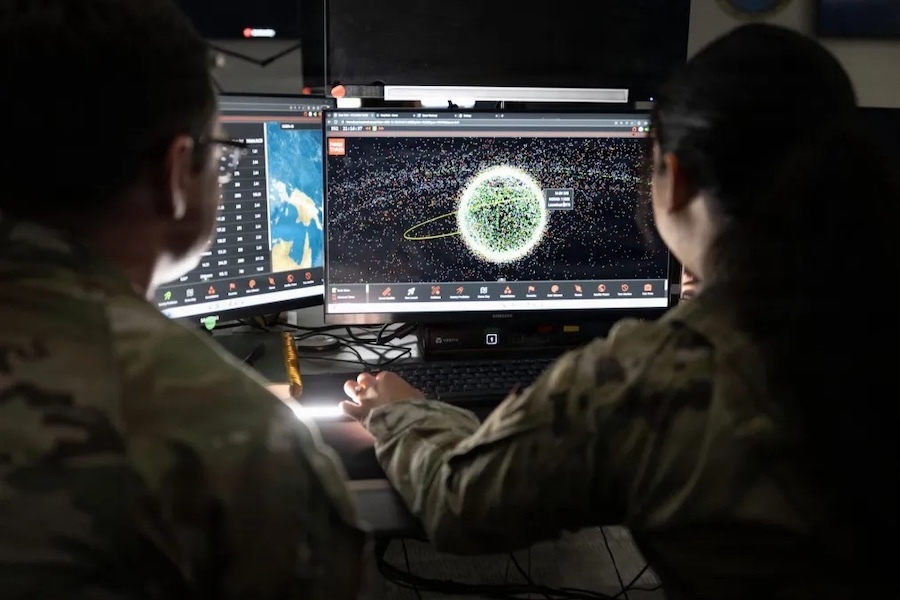
A U.S. Navy Corpsman with 4th Medical Battalion, 4th Marine Logistics Group, Marine Forces Reserve, provides simulated medical care to a casualty at a field medical facility during Exercise Archipelago Endeavor 26 in Berga, Sweden, Sept. 4, 2026. (U.S. Marine Corps photo by Cpl. Garrett Gillespie)
Resilient by Design: Reforming Medical Logistics to Support Global Operations
Michael Ackman & Jonathan Fowler, Joint Force Quarterly
As military planning pivots from counter-insurgency to large-scale combat operations, medical defense logistics must evolve to build flexible, resilient supply networks capable of integrating with international partners.
- Supply Chain Fragility: History demonstrates that global medical supply chains are inherently vulnerable to severe disruptions caused by armed conflict, natural disasters, and global health pandemics.
- Allied Cooperation Hurdles: Existing military systems struggle to leverage medical supplies and resources from international allies and partners effectively, even during peacetime.
- Adaptable Network Imperative: Meeting future combat requirements necessitates medical supply architectures that are explicitly designed to be adaptable, highly flexible, and resilient under pressure.
FAR Overhaul targets commercial buying and negotiations in newest rewrite
Nick Wakeman, NextGov
The Federal Acquisition Regulation (FAR) Council has published a second batch of proposed rule rewrites targeting commercial buying and competitive negotiations to streamline federal procurement and boost industry competition.
- Commercial Procurement Focus: Revisions to FAR Part 12 reorganize rules to create a faster, simpler, user-centric buying process aligned with standard commercial practices, while also expanding commercial service definitions to include construction.
- Negotiation Over Discussions: Updated FAR Part 15 regulations prioritize meaningful direct negotiations over formal discussions, simplifying the definition of "deficiency" and encouraging agencies to negotiate significant proposal weaknesses.
- Flexible Competitive Range: Contracting officers gain explicit authority to retain promising proposals in the competitive range even if they are not the top-rated bids, provided they include terms worth negotiating.
- Comments Open: This publication marks eight of 12 planned overhaul packages, with public comments on the September 18 proposals open through October 19.
Related: Federal Acquisition Regulation: Revolutionary Federal Acquisition Regulation Overhaul Parts 14, 28, 36, and 52
Related: Federal Acquisition Regulation: Revolutionary Federal Acquisition Regulation Overhaul Parts 9, 27, and 47
Related: Federal Acquisition Regulation: Revolutionary Federal Acquisition Regulation Overhaul Parts 16, 17, and 35
Related: Federal Acquisition Regulation: Revolutionary FAR Overhaul Parts 8, 12, 13, 15, 38, 44, and 51
Innovation

Image from NextGenWar
We PCS the C-Suite
Donald Gansberger, NextGenWar
The Department of Defense's innovation initiatives fail due to a broken military assignment system. While the Defense Innovation Unit (DIU) stands out as an exception because its leaders are selected by name rather chosen from a slate, innovation units like Kessel Run and AFWERX follow a predictable institutional decay: early breakthroughs driven by self-selected personnel willing to suffer career damage are subsequently undermined when successful organizations are integrated into routine military assignment rotations. Durable defense acquisition reform requires abandoning superficial structural reorganizations in favor of a formalized, incentivized career track that cultivates, retains, and promotes specialized military innovation talent.
Redesigning UK Defense Procurement for the AI Era
Di Cooke, Center for Strategic and International Studies (CSIS)
The United Kingdom is increasing defense spending at its fastest rate since the Cold War, naming AI a priority growth subsector. Yet the system built to buy ships, tanks, and aircraft was never designed for AI—a technology that can drift in behavior once delivered, hinges on rights to the data and models behind it, and takes specialist judgment to tell whether it works as intended. Recent reforms have made procurement faster, but that does not mean they address AI’s unique characteristics. This brief sets out six recommendations that would address these remaining procurement gaps by equipping the United Kingdom’s Ministry of Defence to be an intelligent customer of AI, redesigning contracts to align with how AI actually works, and growing a trusted supplier and assurance market. Together, they would turn strategic ambition into a procurement system that can buy, contract for, and sustain AI at the pace operations demand.
Industry
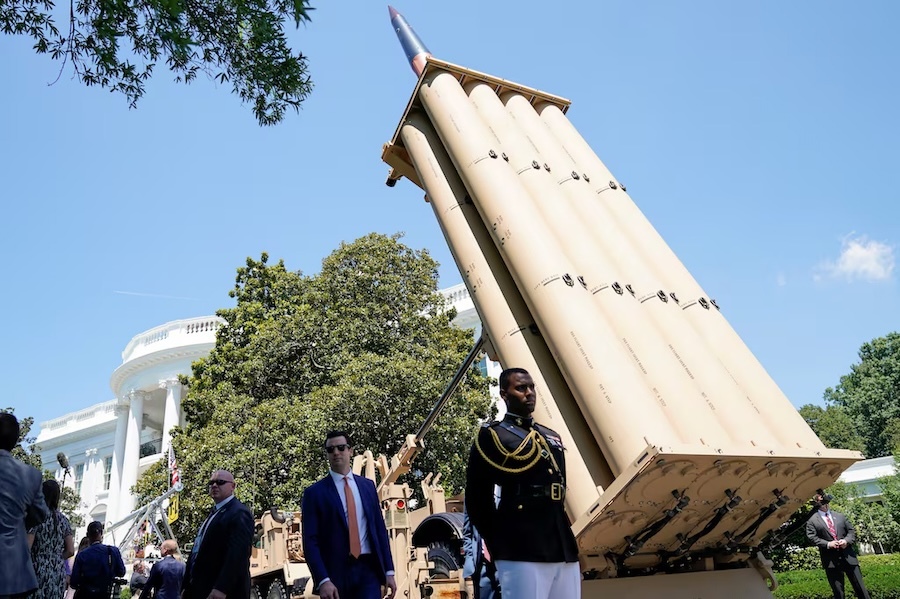
A Lockheed Martin Terminal High Altitude Area Defense (THAAD) missile interceptor is seen during the third annual "Made in America Product Showcase" at the White House on July 15, 2019. (Kevin Lamarque/Reuters)
The Pentagon asked industry how fast it could make more weapons. The numbers remain private.
Natalie Oliverio, Defense News
Following heavy munitions expenditures during the Iran war, the Pentagon requested defense contractors submit plans to accelerate weapons production. But nearly a month after the deadline, details and response numbers remain entirely private.
- Urgent Production Call: Defense leaders gave industry until late August to submit aggressive plans for scaling up manufacturing across 16 critical weapon programs to inform the fiscal 2028 budget request.
- Official Data Silence: Nearly a month past the submission deadline, the Pentagon and major defense contractors like General Dynamics and Lockheed Martin have refused to disclose response numbers, proposed timelines, or funded projects.
- Broader Framework Deals: Alongside or prior to the memo, the Department of Defense secured multi-year agreements with RTX, Boeing, L3Harris, and General Dynamics aiming to triple PAC-3 MSE and quadruple THAAD production capacity.
- Unresolved Strategy Impact: It remains uncertain whether the 21-day industry query actually altered the Pentagon's long-term procurement strategy, delivery expectations, or official budget requests.
Research

Image created by Codex
A Comparative Analysis of FAR Part 13 vs. FAR Part 15 in the Procurement of Commercial Items in Government Contracting
Antonio Cusic & Joseph Ray, Naval Postgraduate School
This study examines why Mission and Installation Contracting Command (MICC) contracting officers underutilize Simplified Acquisition Procedures (SAP) under Federal Acquisition Regulation (FAR) 13.5 for commercial item acquisitions up to $7.5 million—despite the regulation’s intent to streamline procurement. Through qualitative interviews and analysis of internal award data, the research explores how risk aversion, inconsistent training, and internal stakeholder influence (e.g., legal advisors, procurement analysts, small business specialists) affect decision-making. Findings reveal that many officers avoid SAP due to perceived audit risks and a lack of leadership support, defaulting instead to the more burdensome FAR Part 15. Organizational culture and local precedent further shape method selection, often discouraging use of legally permissible flexibilities. The study offers recommendations to improve SAP utilization, including targeted training, clearer policy guidance, and stronger leadership endorsement.
What Is the Return on Investment of Digital Engineering for Complex Systems Development Schedules? Findings From a Mixed-Methods Case Study on the Post-Production Design Change Processes of Navy Assets
Jannatul Shefa & Taylan G. Topcu, Systems Engineering
Complex engineered systems routinely face schedule and cost overruns, along with poor post-deployment performance. Both INCOSE and the U.S. Department of Defense (DoD) have championed Digital Engineering (DE) as a potential remedy, yet most of DE's purported benefits remain anecdotal, and its return on investment (ROI) remains poorly understood. Addressing this gap, this research presents findings from a case study of a Systems Engineering (SE) team conducting the preliminary design process for post-production design changes to legacy Navy assets. Through a mixed-methods study, we document why complex system sustainment projects are routinely late, where and to what extent schedule slips arise, and how the DE transformation could improve schedule adherence. This study makes three major contributions. First, it documents four archetypical inefficiency modes driving schedule overruns and explains how these mechanisms unfold in their organizational context. Second, it quantifies the magnitude and deviation of schedule slips. Third, it creates a hypothetical DE-transformed version of the current process that is aligned with DoD's DE Policy, and compares it against the current state to estimate potential schedule gains. Our findings suggest that DE transformation could reduce the median project duration by 50.1% and the standard deviation by 41.5%, leading to faster and more predictable timelines. However, the observed gains are unevenly distributed across different task categories. To the best of our knowledge, this study presents the first quantitative evidence of DE's potential ROI, offering practitioners and policy-makers a basis for DE investment decisions for system lifecycle management.
Mission Over Bureaucracy: Special Operations Command’s Warrior-Driven Model for Defense Innovation
Robert D. Seader, Joint Force Quarterly
This paper examines how the United States Special Operations Command (USSOCOM) has pioneered a fundamentally different acquisition approach that delivers new capabilities in months rather than the decades typical of conventional programs. Through extensive interviews with senior acquisition leaders, this analysis identifies three core elements of USSOCOM’s success: a mission-centric culture that empowers acquisition professionals to prioritize outcomes over processes; integrated teams that embed war fighters directly with engineers and industry partners throughout development; and streamlined organizational structures that enable rapid decision-making. Case studies demonstrate these practices successfully scaling to major programs like the F-35 fighter and B-21 bomber. The findings suggest that transforming defense acquisition requires cultural change more than regulatory reform.This model offers a critical path forward for maintaining military dominance through acquisition agility rather than bureaucratic control.
Events
DEFCON
Stanford University
7 October 2026
Palo Alto, CA
AUSA Annual Meeting & Exposition
Association of the United States Army
12-14 October 2026
Washington, DC
TechNet Indo-Pacific 2026
AFCEA
26-29 October 2026
Honolulu, HI
Silicon Valley Space Week
SatNews
27-29 October 2026
Mountain View, CA
Defense Conference 26: Operationalizing Acquisition for the Warfighter
Professional Services Council
30 October 2026
Crystal City, VA & Online
One more thing...

Dawn Patrol by Master Sergeant John C. DeGrasse USMC (1951, Korea)
Go to War... Do Art
National Museum of the Marine Corps
First established in 1942, the U.S. Marine Corps Combat Art Program (MCCAP) sends active-duty, reserve, and civilian artists directly into combat zones and humanitarian missions to visually record military history. Across eight decades of global conflicts—from World War II to modern operations—these combat artists have documented the operational experiences of warfighters, creating a permanent art collection for the National Museum of the Marine Corps.
- Guiding Motto: Brigadier General Robert Denig coined the program motto "go to war, do art" in 1942, establishing the founding directive that artists must serve as combatants first and documenters second.
- WWII Origins: Enlisted combat artists known as "Denig's Demons" were deployed to every major Pacific battle with broad artistic freedom to depict war conditions truthfully, bounded only by operational security.
- Korean War Expansion: After being briefly demobilized, the program was reassembled into dedicated teams that documented harsh frontline realities for military publications like Leatherneck magazine.
- Vietnam War Rebirth: Reestablished in 1966, the program introduced civilian artist participation and mandated that all original artwork remain permanent Marine Corps property, producing over 3,000 works that now anchor the National Museum of the Marine Corps collection.
- Peacetime Centralization Era: Following Vietnam, the program was centralized within Headquarters Marine Corps to record humanitarian relief efforts, training exercises, and peacekeeping operations such as the Beirut barracks bombing.
View the online exhibit here.
|