Acquisition
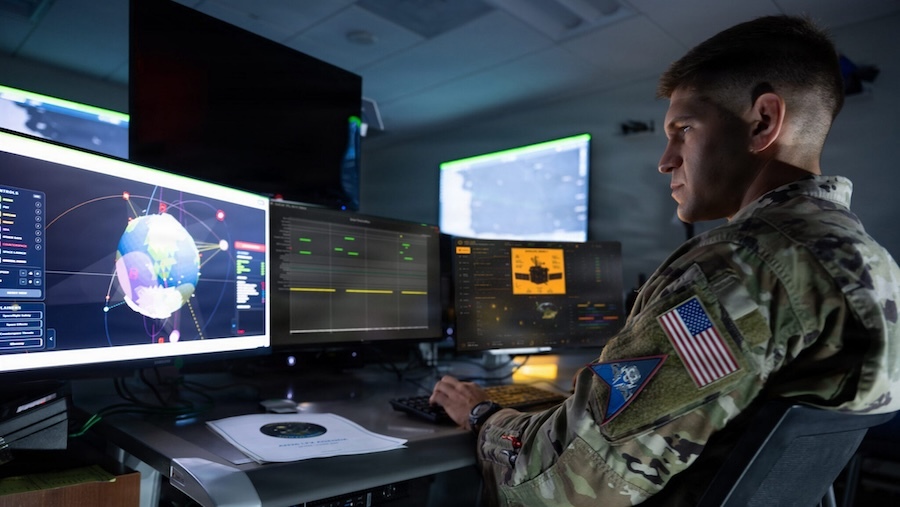
A U.S. Space Force Guardian monitors data on computer screens at a multi-screen operations center workstation at the Combined Space Operations Center (CSpOC), Vandenberg Space Force Base, Calif., May 28, 2026, during the APOLLO NEXUS 26 Live Fire Exercise. (U.S. Space Force photo by David Dozoretz)
Space Force struggling to integrate commercial space data: Officials
Theresa Hitchens, Breaking Defense
The U.S. Space Force is struggling to integrate newly acquired commercial data and technology into its daily operations due to a communication disconnect between its acquisition officers and operators.
- Fear of Commitment: A Government Accountability Office (GAO) report highlighted widespread hesitancy among Space Force organizations to use commercial data, driven by concerns over licensing costs, perceived usage restrictions, and long-term access.
- Internal Communication Gaps: Although the Joint Commercial Operations Cell (JCO) coordinates data sharing across agencies, Space Force officials have been largely excluded from these critical monthly discussions because information about the working group is not widely available.
- Uncoordinated Buying Spree: Flooded with massive funding—including an $18.8 billion fiscal 2026 investment budget—the service has purchased commercial capabilities "willy-nilly" without adequately planning for training resources or operational concepts.
- Bridging the Divide: To unite acquisitions and operations, the service has implemented "Mission Deltas" to merge sustainment professionals with operators and launched "Apollo Insight" tabletop wargames with industry partners.
GAO Report: National Security Space: DOD Has Opportunities to Improve Its Use of Commercial Data and Related Services
Move Fast and Scale: A Brief Insiders' History of the Replicator Initiative
Kathleen Hicks & Aaron Sherman, Belfer Center for Science & International Affairs
An insider perspective on the Replicator Initiative, a Department of Defense program designed to rapidly produce and deploy autonomous military capabilities at a massive scale. The initiative bypassed traditional bureaucratic delays by utilizing top-down leadership and existing funding authorities to meet the strategic challenge posed by China. Beyond the technical goal of fielding attritable drones, the text outlines a broader blueprint for systemic defense reform through five core lessons: wise goal-setting, aligned incentives, senior-level focus, iterative implementation, and strategic communication.
Pentagon scraps public weapons testing reports amid oversight concerns
Daniel Terrill, Defense News
Congressional leaders are demanding answers from Defense Secretary Pete Hegseth after the Pentagon's independent weapons testing watchdog pulled all public reports from its website. Critics argue that restricting access to these safety evaluations degrades crucial oversight and shields expensive, unproven defense programs from accountability.
- Restricted Access: Despite legal obligations to publish unclassified annual reports online, the Pentagon now requires a military-issued Common Access Card to view them, citing concerns that foreign adversaries could use artificial intelligence to map U.S. military vulnerabilities.
- Gutted Oversight: Before proposing a historic $1.5 trillion budget for 2027, Hegseth slashed DOT&E’s staff by 74% and its budget by nearly 80%, prompting watchdog groups to accuse the administration of preemptively silencing internal accountability.
Innovation
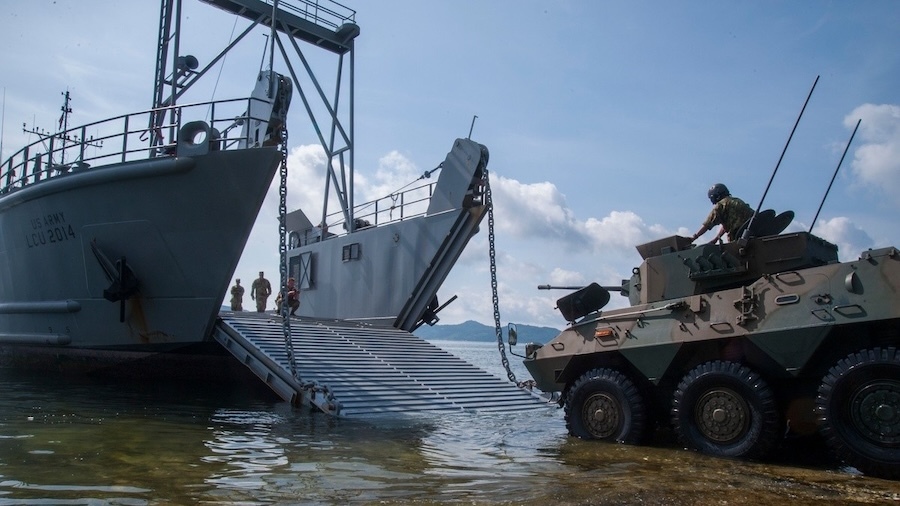
SPC Michael Breneman signals to a Japan Ground Self Defense Force Type 87 armored reconnaissance vehicle during an onload evolution aboard U.S. Army Runnymede-class landing craft utility USAV Coamo (LCU 2014) at Commander, U.S. Fleet Activities Sasebo on July 27, 2016. (U.S. Navy photo) (Photo Credit: PO3 Kristopher Haley)
Cracking the Packing Code – New Models Incorporate Item Priority, Location and Weight Distribution
Tracey Peake, NC State News
NPS Professor William K. Kirschenman, along with researchers from North Carolina State University, have developed innovative packing models that optimize spatial usage while simultaneously accounting for item priority, grouping, and weight distribution. Published in two prominent journals, this research bridges the gap between theoretical spatial optimization and the chaotic realities of tactical military and commercial logistics.
- Beyond Space Optimization: While traditional packing algorithms focus almost exclusively on minimizing wasted space, these new models incorporate crucial real-world constraints such as keeping functionally related items grouped together or placing urgent cargo nearest to exits for rapid retrieval.
- Overcoming Computing Limits: The team designed a "sliding window" matheuristic that breaks the problem into bite-sized pieces, outperforming commercial optimization solvers in both computation time and solution quality.
- Solving Ship Stability: Packing heavy cargo on maritime vessels introduces extreme safety risks, as uneven weight distribution can shift a ship's center of gravity and cause listing. Since balance can only be verified once the entire area is packed, the team developed a post-processing strategy that selectively re-optimizes and shifts lower-priority items at the end of the process to secure stability.
- Tactical Military Roots: The research was heavily inspired by lead author William Kirschenman's firsthand experience as a military company commander, where wargaming amphibious landings illustrated the severe difficulty of organized load planning in highly chaotic and contested environments.
Related: The 2-D Orthogonal Packing Problem with Multiple Levels of Prioritization: A Spatial Optimization Perspective
Related: Enhancing military load planning: A prioritized 2-D orthogonal packing approach
Defense & Strategy
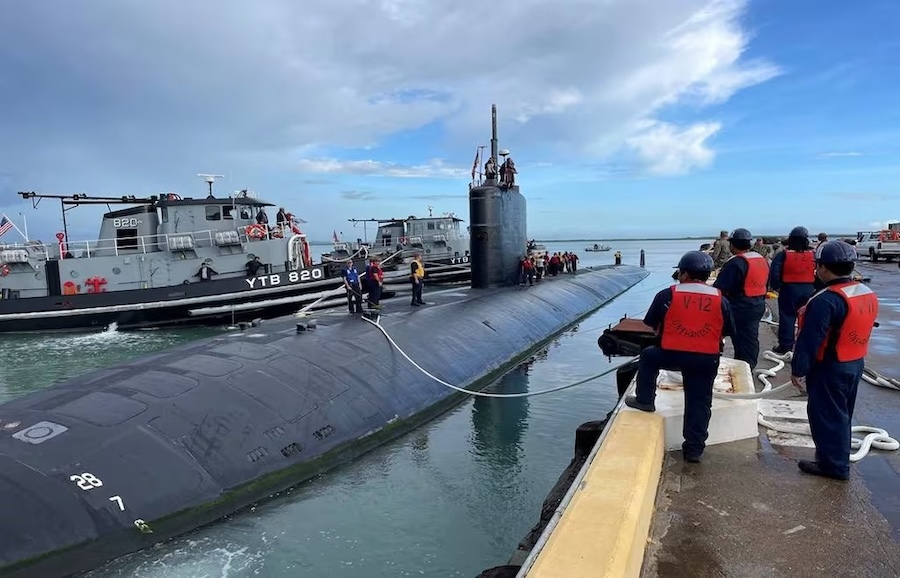
Los Angeles-class attack submarine USS Pasadena pictured at Naval Station Guantanamo Bay, Cuba, July 2023. (Naval Station Guantanamo Bay)
15,000 operational days lost due to US submarine maintenance delays, GAO finds
Michael Peck, Defense News
A newly released Government Accountability Office report reveals that severe U.S. Navy attack submarine maintenance backlogs have cost $3.4 billion and 15,000 lost operational days over the last decade. Driven by deep-seated shipyard capacity constraints, these costly delays are keeping vital, fully-crewed warships stuck idle in port when they should be deployed at sea.
- Dry Dock Traffic: Due to a massive backlog waiting for depot maintenance, submarines enter "active idle time" pier-side once their dive certifications expire, costing $220,000 daily for the Los Angeles-class group and over $237,000 daily for the Virginia-class.
- Worsening Retirement Backlog: Delays in decommissioning retired nuclear submarines cost $722 million over the last decade and are projected to deteriorate further, trapping 15 submarines in 14,000 days of "inactive idle" waiting to be defueled between 2026 and 2030.
- Strained Industrial Infrastructure: Submarine maintenance is restricted to just four public and two private shipyards, all of which suffer from aging infrastructure alongside severe shortages of labor and raw materials.
- Unproven Emergency Solutions: To bypass dry dock bottlenecks, Navy officials have floated alternative strategies like pier-side nuclear defueling, utilizing floating dry docks, or transferring crews to active vessels, but these options lack documented cost-benefit analyses or are still awaiting formal approval.
Related: Navy Readiness: Actions Needed to Address Costly Attack Submarine Maintenance Challenges
Evaluating Pathways for U.S. Shipbuilding Cooperation with Allies
Henry Carrol, Cynthia R. Cook, & Seamus P. Daniels, Center for Strategic and International Studies (CSIS)
Faced with persistent workforce, infrastructure, supply chain, and procurement bottlenecks, the U.S. naval shipbuilding enterprise struggles to deliver vessels at the pace, scale, and cost required. This report examines how deepening cooperation with key maritime allies, specifically South Korea and Japan, through targeted and hybrid industrial pathways can help the United States overcome these domestic capacity constraints.
- Four Cooperation Pathways: The authors identify and evaluate four primary methods of collaboration: attracting allied capital investment into U.S. shipyards, engaging in modular or "green hull" coproduction, directly purchasing foreign-built vessels, and expanding maintenance and repair activities at overseas yards.
- No Easy Cure-All: While international collaboration holds significant promise, the authors caution that allied cooperation is not a panacea, noting that no single pathway can simultaneously satisfy every U.S. strategic and industrial objective.
- Advocating Hybrid Models: To navigate these limitations, the report recommends utilizing hybrid approaches that combine near-term foreign hull construction with sustained investments in domestic shipyards, workforce training, technology sharing, and a phased expansion of domestic industrial participation.
Government Reports

The Advanced Extremely High Frequency (AEHF) system, a joint service satellite communications system that provides survivable, global, secure, protected and jam-resistant communications for high-priority military ground, sea and air assets. U.S. Air Force photo
National Security Space: DOD Has Opportunities to Improve Its Use of Commercial Data and Related Services
Government Accountability Office
Navy Readiness: Actions Needed to Address Costly Attack Submarine Maintenance Challenges
Government Accountability Office
Research
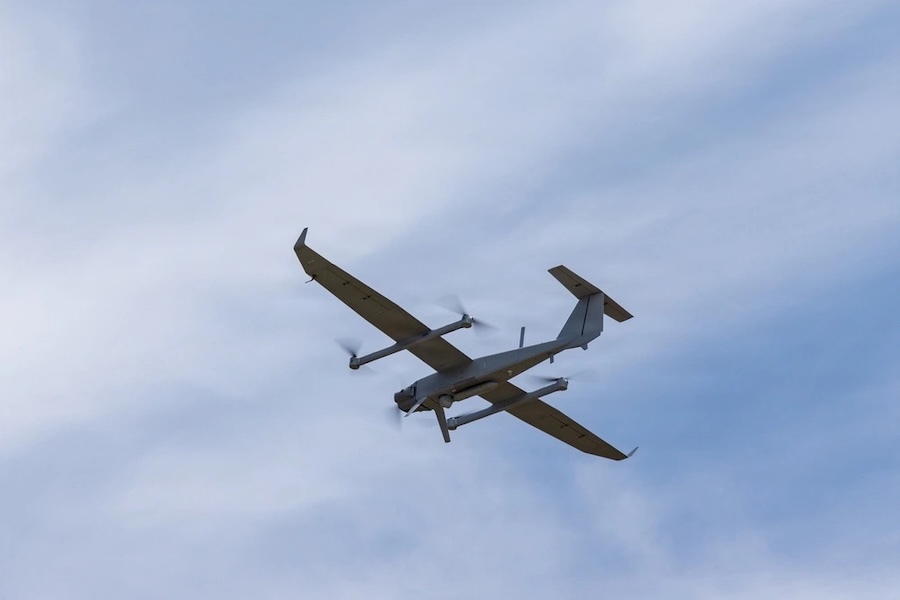
A Jump 20 Heavy Fuel Engine Variant Unmanned Aerial System with AeroVironment takes off during Command Post Exercise 2 at Marine Corps Outlying Landing Field Atlantic, North Carolina, Aug. 25, 2026. (U.S. Marine Corps photo by Cpl. Channah Chilton)
Optimizing Contracting Strategies for Medium Unmanned Aerial System (mUAS) Acquisition: A Comparative Analysis of FAR and Non-FAR Approaches for the U.S. Coast Guard
Zachary Brown & Mikeal Wolf, Naval Postgraduate School
This thesis examines how FAR and non-FAR contracting mechanisms support the U.S. Coast Guard’s acquisition of medium unmanned aerial systems (mUAS) as technology evolves faster than traditional procurement processes. The study finds that a phased, life-cycle contracting strategy, leveraging non-FAR tools for early prototyping and FAR mechanisms for production and sustainment best aligns with Coast Guard mission demands and institutional constraints. Results show non-FAR tools provide superior agility during early development, FAR Part 12 supports commercial integration, and FAR Part 15 ensures transparency and accountability for long-term sustainment. The analysis confirms that no single pathway is optimal across the acquisition life cycle and that the Coast Guard’s limited OTA authority constrains rapid innovation.
Assessment of the Indo-Pacific Command Area of Responsibility Commercial Support Environment for Warfightning Capabilities
Christopher Garay-Perez & Lucas Beltran, Naval Postgraduate School
The Indo-Pacific’s contested logistics environment exposes a critical gap in the Department of Defense’s ability to assess whether commercial support networks can sustain distributed Marine Corps operations, particularly in the Philippines—the most operationally relevant and politically fragile node in the theater. This study develops a framework to evaluate the strength of the commercial support environment by aligning publicly available federal contracting data with doctrinal warfighting functions. The results show that while the Philippines has a mature sustainment market and moderate transportation capacity, both are geographically concentrated and vulnerable to disruption, and commercial command and control (C2) capability is almost nonexistent. These findings indicate that commercial support can enable steady-state operations near major hubs but cannot independently sustain distributed stand-in forces under gray-zone pressure.
Enhancing military load planning: A prioritized 2-D orthogonal packing approach
William K. Kirschenman, H. Sebastian Heese, et al, Omega
Military combat loading requires arranging equipment on maritime transport vessels to enable rapid, prioritized off-loading while maintaining unit cohesion and vessel stability. Related maritime deck-loading settings can involve similar access, grouping, and balance requirements. This paper studies three solution approaches for this globally constrained problem: a monolithic mixed-integer linear programming (MILP) approach, a sliding-window matheuristic, and a sliding-window matheuristic with in-stride load balancing penalties. Computational experiments demonstrate that the matheuristic approaches fundamentally outperform the monolithic MILP approach in load balance reliability, solution quality, and computational efficiency, providing practical guidance for integrating automated optimization into military load planning systems. The matheuristic pipelines generate high-quality, load-balanced solutions for single-vessel scenarios within a few minutes on average, enabling rapid evaluation of multiple loading configurations during time-critical deployment planning.
Events
Emerging Technologies for Defense Conference & Exhibition
NDIA
8-10 September 2026
Washington, DC
Air, Space & Cyber Conference
Air & Space Forces Association
14-16 September 2026
National Harbor, MD
Unmanned Maritime Systems Technology (UMST) USA
SAE Media Group
14-16 September 2026
Arlington, VA
Creative Disruptors by the Lakes
Creative Defense Foundations
18-19 September 2026
St. Paul, MN
2026 Undersea Warfare Fall Conference
NDIA
21-23 September 2026
Groton, CT
OCEANS 2026 Monterey
IEEE Oceanic Engineering Society (OES)
21-24 September 2026
Monterey, CA
Naval Forge 20XX: Warfare Innovation Continuum Workshop
Naval Postgraduate School
21-24 September 2026
Monterey, CA & Online
BlueTech Nexus
Naval Postgraduate School & FLEETWERX
22 September 2026
Monterey, CA
Defense Conference 26: Operationalizing Acquisition for the Warfighter
Professional Services Council
30 October 2026
Crystal City, VA & Online
One more thing...

Jonny Kim will return to active-duty military service after working at NASA for nearly a decade. (NASA)
Jonny Kim’s resume already lists Navy SEAL, astronaut, doctor. He’s now returning to active duty.
Riley Ceder, Navy Times
NASA astronaut, Harvard-educated physician, and former Navy SEAL Jonny Kim is returning to active-duty military service to support naval aviation training after nearly a decade at the space agency. Throughout his extraordinary career across land, sea, and space, Kim has continuously pushed past conventional human limits, driven by a deep commitment to service and a people-centered leadership philosophy.
- Traversing the Stars: Since becoming an astronaut in 2017, Kim has served as a capsule communicator in mission control, helped develop the moon-bound Artemis program, and spent eight months aboard the International Space Station in 2025, orbiting the Earth 3,920 times.
- Returning to Duty: Kim is leaving NASA to resume active-duty Navy service as a lieutenant commander, where he will apply his extensive operational and technical expertise to naval aviation training.
- Elite Combat Roots: Enlisting in the Navy in 2002, Kim completed over 100 combat missions as a SEAL Team Three medic, sniper, navigator, and point man in the Middle East, earning both the Silver Star and Bronze Star with Combat “V”.
- Medical Inspiration: His interest in medicine was sparked during a grueling 2006 deployment to Ramadi, where he felt powerless trying to save wounded civilians and teammates because he could only stabilize them before handing them to a surgeon.
- Unparalleled Academic Drive: While transitioning from active combat, Kim graduated summa cum laude in mathematics from the University of San Diego, earned a medical degree from Harvard Medical School, and successfully trained to simultaneously become a naval aviator and flight surgeon.
|