| |
|
Acquisition Research Program Newsletter
September 11, 2026 — Issue 299
|
|

CALL FOR PAPERS AND PANELS
This week, we pause to remember those who lost their lives on September 11, 2001, and to honor all those affected by the attacks and their aftermath. As we mark the 25th anniversary of that day, we reflect on the courage, sacrifice, and resilience demonstrated by first responders, service members, public servants, and countless individuals who answered the call to serve. Their legacy reminds us of the enduring importance of commitment, leadership, and service to our nation and communities.
In this edition...
The strategic importance of commercial shipbuilding - and why focusing on shipyards alone won't deliver competitive advantage...
How high-energy explosives such as RDX became a single point of failure in the munitions supply chain...
And how the US industrial base is adjusting as allies seek greater sovereignty over defense technology purchased from the US.
Plus, defense startups are relying on venture capital and local investment to bridge the valley of death - but state involvement risks limiting the Pentagon's flexibility.
Read on...
This Week's Top Stories

Industrial cargo port with gantry cranes loading a container ship, showcasing the maritime transport industry and global trade operations in a major shipping hub. (Photo via Getty Images)
Beyond Shipyards: Commercial Shipbuilding and China-U.S. Maritime Competition
Yilun Zhang, Institute for China-America Studies (ICAS)
Commercial shipbuilding has re-emerged as a vital strategic arena driven by global fleet renewals, changing energy trade patterns, and geopolitical competition. Rebuilding or maintaining competitiveness in this sector requires cultivating a deeply integrated industrial ecosystem of suppliers, finance, and labor rather than focusing on shipyards in isolation.
- Ecosystem-Wide Foundations: True maritime competitiveness relies on an entire industrial ecosystem—comprising steel producers, engine manufacturers, maritime finance, and skilled labor—rather than individual shipyards that merely assemble the final vessels. Once this ecosystem degrades, it is exceptionally difficult to rebuild.
- Global Fleet Renewal: A major demand cycle is approaching because approximately one-quarter of the global container fleet is over twenty years old. This aging infrastructure, combined with rising environmental fuel regulations and growing U.S. LNG and crude oil exports, is driving a sustained, decade-long demand for new, specialized commercial ships.
- China's Deep Integration: China’s global dominance was built over decades by consolidating fragmented yards into massive, highly coordinated shipping groups. Backed by dense supplier networks and domestic steel production, Chinese shipbuilders attract international orders by offering reliable schedules, low costs, and advanced vessel designs.
- Collaborative Onshoring Efforts: The United States is transitioning from treating shipyard decline as an inevitable consequence of globalization to addressing it as a major economic security threat. Rather than attempting to match China’s massive scale, the U.S. is utilizing legislative reforms to expand domestic capacity while coordinating with allies like Japan and South Korea to diversify production.
The Arsenal and the Statehouse: New Defense Firms, Venture Capital and State Industrial Policy
Joshua Alley, War on the Rocks
Modern defense startups are increasingly utilizing state economic development subsidies and venture capital to bridge the gap between initial prototyping and permanent federal contracts. This shift creates a new "arsenal" where local governors and statehouses, rather than just federal legislators, hold a significant political stake in the success of emerging technologies. While these funding models accelerate growth, they risk introducing political rigidity by making it difficult for the government to cancel unproven or failing programs that now support local jobs. To counter these issues, the author advocates for increased transparency in state-level deals and a federal review process to ensure that local financial interests do not undermine national security innovation.
An Explosive Problem: Energetics, Supply Chain Fragility, and US Military Readiness
Morgan Bazilian, Modern War Institute
American military readiness is currently jeopardized by a fragile supply chain for high-energy explosives like RDX. Rebuilding this vital capacity is severely hampered by single-point-of-failure domestic facilities, reliance on global chemical supply chains, and failed manufacturing partnerships.
- Single-Point Failure: RDX, the standard explosive filler for American ordnance since 1941, is produced at only one domestic location: the Holston Ordnance Works.
- Precursor Supply Vulnerabilities: Synthesizing RDX requires dual-use chemical inputs like hexamine, nitric acid, and acetic anhydride. The supply chains for these basic chemicals have largely shifted to China and the Gulf, creating a thin and rigid market that cannot easily scale for sudden defense surges.
- Decades of Neglect: The United States went without a dedicated domestic TNT producer for roughly forty years, depending on European allies like Poland's single remaining exporter. The U.S. is only now attempting to onshore production through a Turkish-owned subsidiary in Kentucky.
|
|
ARP and NPS News

Aarohi Joshi, a high school senior from California, explains her research to an attendee at the 2026 Naval Postgraduate School STEM Internship Research Showcase, August 7, 2026. (Photo: Naval Postgraduate School)
Next generation of scientists and engineers display their research at NPS
NPS Public Affairs
The Naval Postgraduate School (NPS) hosted its 2026 STEM Internship Research Showcase on August 7, highlighting the institution's commitment to developing the next generation of defense scientists and engineers. This program connects high school, undergraduate, and graduate students with hands-on, naval-relevant research that has immediate, real-world consequences for national security.
- Cultivating Future Innovators: Nearly 70 high school, undergraduate, and graduate interns from across the United States converged to share their summer research findings, demonstrating how the program prepares students for vital careers in the defense STEM workforce.
- Simulating Warhead Dynamics: Aarohi Joshi, a high school senior from California, collaborated with NPS physics professor Joseph Hooper to build a virtual warhead fragmentation simulator that tracks key variables like mass, velocity, and ejection angle, creating a flexible, modern tool that can easily be updated as new military needs emerge.
- Real-World Impact: Interns noted that working at a combined naval base and research institution offers a distinct, hands-on environment where they are constantly pushed to find new avenues to explore and improve their research because their work carries real-world consequences.
- Collaborative Academic Environments: Participants found the NPS environment highly motivating compared to a traditional classroom, as it exposes them to challenging projects with direct practical applications while encouraging valuable cross-disciplinary collaboration.
- Structured Pipeline Support: These immersive summer opportunities are fully supported by several prominent programs, including the Office of Naval Research Science and Engineering Apprenticeship Program (SEAP), the Naval Research Enterprise Internship Program (NREIP), regional college partnerships, and the NPS Student Volunteer Program.
The Department of Acquisition, Finance, and Manpower (DAFM) at Naval Postgraduate School is seeking two lecturers in defense contract management for on-campus positions in Monterey, CA.
Job Listing: Full-time Lecturer
Job Listing: Intermittent Lecturer
Submit letter of application and current resume or curriculum vitae to: Dr. Simona Tick at and Dr. Robert Mortlock at rfmortlo@nps.edu.
|
|
Acquisition

Airmen assigned to the 147th Aircraft Maintenance Squadron perform postflight checks on an MQ-9 Reaper drone assigned to the 147th Attack Wing, Texas Air National Guard, at Keflavík Air Base, Iceland, during Exercise Northern Viking 26, Aug. 21, 2026. (Photo by Air Force Senior Airman Edgar Grimaldo)
Killer Drones: Ready or Not, Here They Come
John G. Ferrari & Dillon Prochnicki, American Enterprise Institute
Driven by demographic shifts and rapid technological progress, the rise of lethal autonomous weapons is a structural reality that the United States must proactively develop on its own terms. To field this capability effectively, the military must replace its rigid, platform-centric acquisition processes with a decentralized, highly competitive framework driven by operator-technologist incubators.
- Bureaucratic Barriers: The Pentagon's slow budget cadence, platform-focused testing, and traditional color-of-money restrictions block the continuous iteration software requires, while conservative service cultures resist systems that threaten legacy communities.
Flexible Funding: Congress should direct the proposed $54.6 billion in flexible, multiyear autonomy funding to competing service-level and combatant command incubators, conditioning future resources on actual transition into the force.
- Joint Oversight: A thin joint board should manage common interoperability, certification, and audit standards rather than dictating requirements, ensuring systems can collaborate without centralizing control.
Industry

A concept model of their next-generation combat aircraft. Source: BAE Systems
Experts: What Canada Joining Sixth-Gen Fighter Program Signals for US Industry
Steve Losey, Air & Space Forces
Canada’s decision to join the European-Japanese Global Combat Air Programme (GCAP) as an observer highlights a growing global trend of allies seeking defense self-reliance over U.S. military platforms. This shift toward independent international partnerships could ultimately undermine joint interoperability and raise production and sustainment costs for future U.S. defense programs.
- Export Barrier: While the U.S. is developing its own F-47 sixth-generation fighter, experts believe exports are highly unlikely because the platform is too expensive, designed specifically for a Pacific fight against China, and bound by strict congressional technology protections similar to the F-22 export ban.
- Industrial Rebound: If allies abandon U.S. hardware, it will degrade tactical interoperability during joint operations. Furthermore, shrinking foreign customer bases will prevent American defense contractors from achieving economies of scale, driving up costs for Pentagon acquisitions and critical spare parts.
Europe wants ITAR-free weapons. US firms are trying to adjust.
Ashley Roque and Aaron Mehta, Breaking Defense
Increasing strategic skepticism and rising defense budgets have prompted European nations and Canada to aggressively pursue "ITAR-free" weapons systems to protect their sovereign tech and export freedom from restrictive U.S. regulations. While completely bypassing high-quality U.S. dual-use components remains a significant technical challenge, American firms are already seeking regulatory reforms and expanding their local European footprints to prevent losing critical market share.
- Restrictive See-Through Rule: Under the U.S. International Traffic in Arms Regulations (ITAR), any foreign-built weapon incorporating even a single U.S. component remains subject to U.S. export licensing, allowing Washington to delay or block third-party sales for political reasons.
- Competitive Marketing Shift: European defense firms, such as Lithuania's Aktyvus Photonics, are actively weaponizing "ITAR-free" labeling as a key marketing strategy to gain unique market access and displace American contractors.
- Adapting American Strategies: To protect their market share, U.S. trade groups are urging Washington to reform and streamline the ITAR process, while individual defense firms like Honeywell are expanding local manufacturing to position themselves as domestic European suppliers.
Related: Commerce aims to speed advocacy timelines for foreign weapon sales
Research
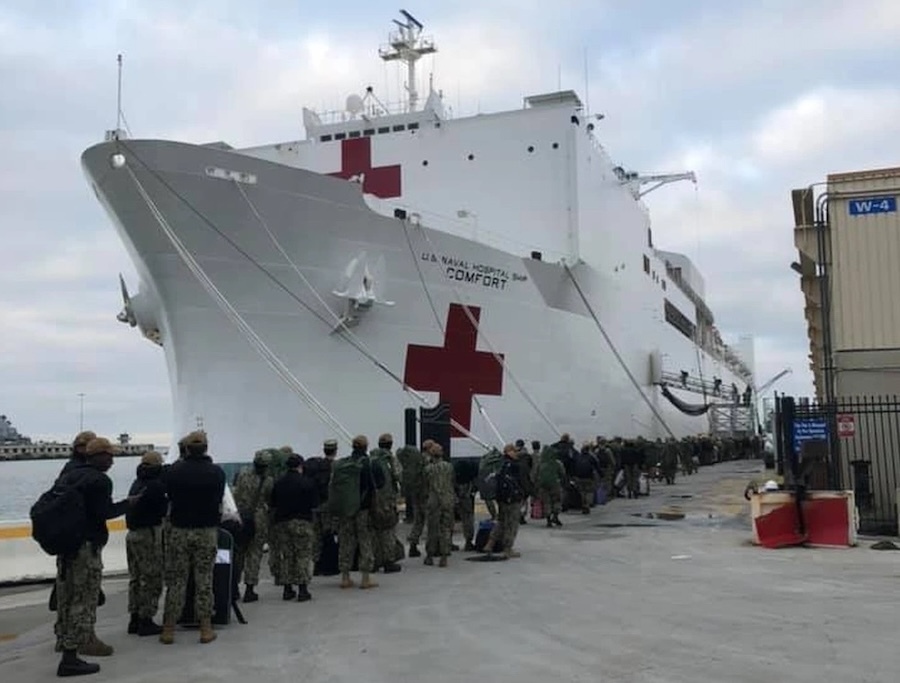
Defense Logistics Agency Distribution Norfolk, Virginia’s workers support the load-out mission of USNS Comfort (T-AH 20) as it set sail for New York City, New York, March 28, 2020. Photo by Navy Capt. Thomas Neville, commander, DDNV.
Mapping the Afloat Medical Materiel Supply Chain: Procurement and Transshipment in the U.S. Navy
Matthew Baure, Naval Postgraduate School
This study examined factors contributing to extended lead times in the U.S. Navy’s Class VIII(a) medical materiel supply chain and identified opportunities to improve logistics responsiveness for afloat units operating under Pacific Fleet (PACFLT). A comprehensive process map was developed using qualitative data from stakeholder interviews, direct observations during a site visit to Defense Distribution Norfolk, Virginia (DDNV), and document review. Quantitative data were analyzed to assess transshipment throughput, backlog behavior, capacity utilization, and the effects of demand variability. Comparative analysis showed that electronic catalogue (ECAT) ordering reduced procurement lead times by an average of 53.5 days relative to Military Standard Requisitioning and Issue Procedures (MILSTRIP), accounting for up to 72 percent of total supply chain duration for CONUS units and 65 percent for OCONUS units. Modeling indicated that increasing staffing to 10 processor full-time equivalents would reduce average processing time from 7 to 1.7 days, decreasing backlog and overtime. Conversely, establishing a second transshipment center would increase total backlog, reduce efficiency, and raise manpower costs. Findings suggest that aligning authorized medical allowance list (AMAL) assemblages with e-commerce contracting would increase transshipment capacity, and defining fleet performance standards would improve Class VIII(a) logistics readiness.
Optimizing Defense Acquisition Cycle Time Using Random Forest Models
Hanson Hao, George Washington University
Emerging and evolving global threats necessitate new military capabilities to be developed. Development speed is essential to maintain the technological advantage for the US Department of Defense in any potential engagement. However, new capability delivery has been significantly delayed from their original estimates. The DoD have been challenged to produce more accurate cycle time predictions and understand methods of reducing cycle time. This Praxis utilizes random forest regressions as a method of generating accurate cycle time predictions and understanding predictor importance. Random forest regressions can handle various input types, making them ideal for testing and evaluating candidate predictors. The random forest regressions are trained on the Government Accountability Office’s Weapon Systems Annual Assessment reports, the Director, Operation Test and Evaluation reports, and the Selected Acquisition Reports from 2015 to 2024. After feature selection and hyperparameter tuning, the model was able to produce an adjusted R2 of 83.4. Additionally, it identified that budgetary variables such as development and procurement costs are the most important for cycle time estimates. The timing of program initialization relative to election cycles was also identified as an important predictor. Finally, program behaviors like software development approach and reuse also have high importance.
Events
Air, Space & Cyber Conference
Air & Space Forces Association
14-16 September 2026
National Harbor, MD
Unmanned Maritime Systems Technology (UMST) USA
SAE Media Group
14-16 September 2026
Arlington, VA
Creative Disruptors by the Lakes
Creative Defense Foundations
18-19 September 2026
St. Paul, MN
2026 Undersea Warfare Fall Conference
NDIA
21-23 September 2026
Groton, CT
OCEANS 2026 Monterey
IEEE Oceanic Engineering Society (OES)
21-24 September 2026
Monterey, CA
Naval Forge 20XX: Warfare Innovation Continuum Workshop
Naval Postgraduate School
21-24 September 2026
Monterey, CA & Online
BlueTech Nexus
Naval Postgraduate School & FLEETWERX
22 September 2026
Monterey, CA
Defense Conference 26: Operationalizing Acquisition for the Warfighter
Professional Services Council
30 October 2026
Crystal City, VA & Online
One more thing...
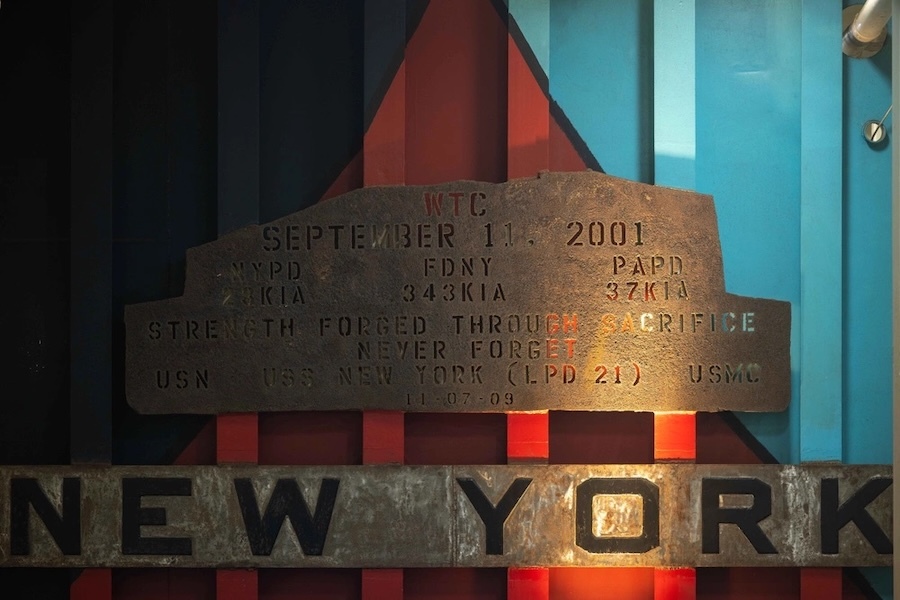
Photo By Cpl. Ryan Ramsammy | 240903-N-CQ925-1022 MEDITERRANEAN SEA (Sep. 3, 2024) - Steel recovered from the wreckage of 9/11 hangs above a passageway aboard the San Antonio-class amphibious transport dock ship USS New York (LPD 21), Sep 3, 2024. (U.S. Marine Corps photo by Cpl. Ryan Ramsammy)
USS New York: The Floating Museum at Sea
Lt.j.g. Jorge Parsons, DVIDS
The USS New York (LPD 21) is a San Antonio-class amphibious transport dock ship that serves as a highly capable multi-mission warship and a living memorial to the victims of the September 11, 2001 terrorist attacks.
- Sacred Steel: In September 2003, builders melted down 7.5 tons of steel recovered from Ground Zero to forge the ship's bow stem, physically embedding the legacy of the 2,977 victims into the heart of the warship.
- Trio of Memorials: The USS New York was the first of three Navy vessels designed as living memorials to the 9/11 tragedy — alongside the USS Arlington and USS Somerset. It features an interior adorned with murals, posters, and patches that offer sailors quiet moments of reflection.
- Honoring Individual Lives: While at sea, the ship's chaplains lead a daily ritual of reading a brief biography and personal story of a 9/11 victim over the public address system prior to the evening prayer, keeping the human stories behind the tragedy front and center.
|
|
|
Maureen Lauder, PhD, Communications Manager
Karey Shaffer, MBA, Program Manager
Acquisition Research Program
Naval Postgraduate School
e: ARPEditor@nps.edu
Note: Article summaries were generated with the help of AI tools.
|
|
|
|
|