Acquisition
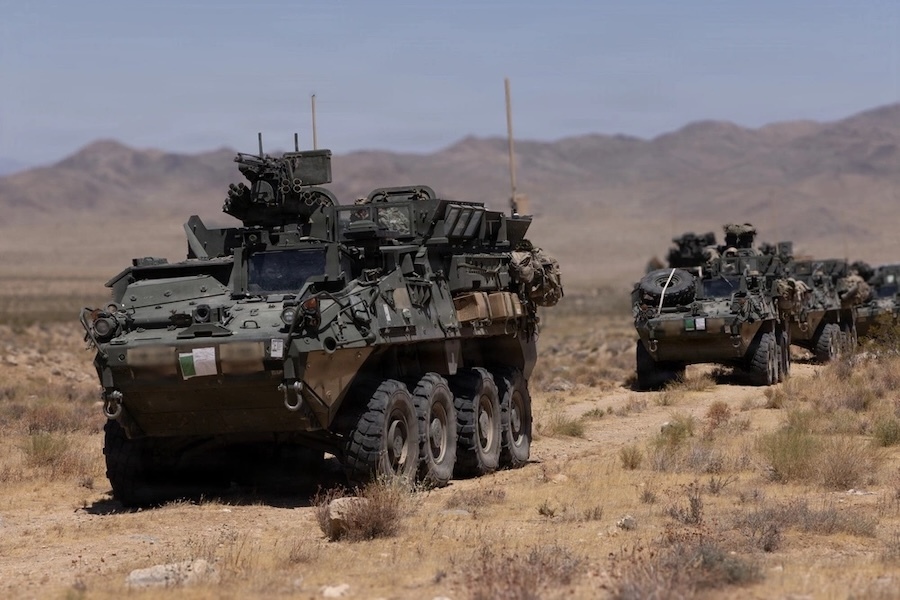
A U.S. Army Stryker outfitted with an integrated NGC2 system during the Project Convergence-Capstone 6 (PC-C6), July 7 - 29, 2026, at the National Training Center in Fort Irwin, California. (US Army photo by Courtney Harris)
Speed to the Warfighter Starts With the Problem, Not the Product
Pete Newell, RealClear Defense
Defense innovation speeds capability to warfighters not by building products faster, but by rigorously focusing on real operational problems owned by front-line personnel. Without defining the problem through ground-truth operational suffering and field validation, faster procurement engines merely deliver the wrong requirements faster.
- Sustaining Operational Pain: Successful teams solve problems directly experienced by front-line leaders like lieutenants and captains, rather than abstract issues identified by R&D centers or portfolio offices.
- Measuring Human Lives: Problem statements must quantify stakes in terms of warfighter survival under enemy fire rather than workflow efficiency, as demonstrated by fuel convoy reduction efforts during counter-IED operations.
- Fixing Missing Steering: Major acquisition reforms modernized procurement speed but failed to establish front-end mechanisms for problem detection, evaluation, and knowledge distribution.
- Rebuilding Discovery Teams: The Pentagon should re-establish forward problem-discovery teams alongside operational units and mandate a named military champion before funding any initiative.
Related: Why the last tactical mile is crucial to acquisition reform
Sub Czar: The Imperative for Acquisition Reform
Vice Admiral Robert M. Gaucher, U.S. Navy, Proceedings
In this article, Vice Admiral Robert M. Gaucher - Director, Submarine Programs - outlines an overarching plan to reorganize the U.S. undersea acquisition ecosystem to overcome manufacturing bottlenecks and meet rising peer threats. The creation of a dual-hatted Director, Submarine Programs (DSP) consolidates acquisition, construction, and sustainment authority under a single leader to eliminate fragmented decision-making.
- Near-Term Productivity Levers: Immediate operational improvements center on workforce retention and outsourcing, streamlining deckplate processes, and transitioning from just-in-time delivery to a monitored inventory system
- Design Discipline: To prevent rework, cost growth, and schedule delays, the Navy will enforce strict baseline design stability and limit change orders until materials and drawings are fully prepared.
- Refocusing Prime Yards: General Dynamics Electric Boat and Newport News Shipbuilding - the only US shipyards able to assemble a Virginia- or Columbia-class submarine - should focus on complex module assembly, outfitting, and testing while shifting other work to qualified partners.
- Activating the Industrial Base: The Navy should support long-term stability by offering multiyear contracts, synchronized material orders, and supportive cash flow models that enable private vendors to confidently invest in workforce and facility expansion.
- Producibility-Focused Engineering: Future platform designs should prioritize ease of construction and maintenance, rather than optimizing purely for performance.
Speed to Fielding Is Not Speed to Combat Power
Michael Woodhouse, War on the Rocks
Defense acquisition reforms focus too narrowly on rapid hardware delivery while neglecting operator readiness and training infrastructure.
- Misleading Delivery Metrics: Current acquisition benchmarks stop when equipment arrives at a unit, hiding real operational delays caused by missing courseware and outdated doctrine.
- Widespread Institutional Lag: Oversight reports show major Army modernization efforts were fielded before completing essential planning elements like soldier training pipelines, leaving operators with complex hardware they cannot confidently employ.
- Measuring Operator Proficiency: The Department of Defense should mandate "time to proficiency"—measuring how long it takes a representative operator to perform realistic, high-pressure missions independently without trainer prompts.
- Driving Usable Design: Elevating time to proficiency to a key performance parameter forces contractors to minimize cognitive clutter and refine user interfaces alongside traditional metrics like range and lethality.
- Exposing Hidden Costs: Tracking proficiency speeds reveals total operational costs, showing that cheaper systems requiring months of specialized retraining are less valuable than intuitive platforms that rapidly deliver combat power.
Innovation

The V-280 Valor in flight. (Bell Textron photo)
Despite Unclear Delivery Date, Army’s Next-Gen Rotorcraft Flies Forward
Laura Heckmann, National Defense
The U.S. Army's MV-75 Cheyenne II Future Long-Range Assault Aircraft (FLRAA) program employs novel acquisition methods to field a tiltrotor platform that flies twice as fast and far as the Black Hawk.
- Pathfinder Digital Framework: Designated as an Army pathfinder initiative, the program serves as a defense acquisition model for applying digital engineering and model-based systems engineering across complex procurement efforts.
- Modular Open Architecture: Adopting a modular open systems approach provides the aircraft with an adaptable digital backbone, allowing capability upgrades via rapid software updates rather than decade-long physical redesigns.
- Embedded Collaborative Teams: Army acquisition staff, pilots, mechanics, and infantry personnel are embedded directly within Bell Textron facilities, using real-time digital data access to accelerate design reviews and user evaluations.
- Digital Schedule Compression: By assembling and refining the aircraft in a digital environment prior to physical manufacturing, the program eliminated traditional gaps between prototyping and production, shortening fielding schedules by up to 30 months.
- Virtual Twin Prototyping: Service operators regularly fly cockpit simulators driven by digital twin models at Fort Rucker, providing frontline user feedback years before final physical aircraft delivery.
- Simulated Model Validation: Engineers leveraged model-based engineering to simulate hundreds of operational use cases, validating long-term sustainment pathways and preventing future component obsolescence.
Funding the future: A look back on federal tech investment
Camille Tuutti, Nextgov
For two and a half centuries, the U.S. government has served as the chief catalyst for foundational technological breakthroughs by absorbing severe technical risks decades before commercial markets exist. From early digital computing and GPS to the internet and mRNA vaccines, public investment creates open, high-impact platforms that drive long-term economic growth, though the rise of privately funded AI presents new challenges for national R&D strategy.
- Catalyzing Breakthrough Tech: Critical innovations—including DARPA-funded mRNA research, autonomous vehicle competitions, and satellite networks—unlocked vast commercial industries only after decades of public research.
- Public Value: While commercial firms construct proprietary "moats" to monetize products, public investments prioritize open, interoperable platforms like GPS and ARPANET that deliver widespread economic dividends.
- Pioneering Mass Production: Early federal backing of Eli Whitney’s interchangeable musket parts in the 1790s established "Armory Practice," creating the foundation for modern industrial mass production.
- Birth of Computing: The U.S. Army financed ENIAC in 1943 to compute artillery firing tables, bankrolling the world's first general-purpose digital computer when no commercial market existed.
- Shifting Landscape: Unlike previous state-driven tech revolutions, current U.S. policy relies on partnerships with technology companies and underutilizes the country's public national laboratory network and academic research ecosystem.
Defense & Strategy
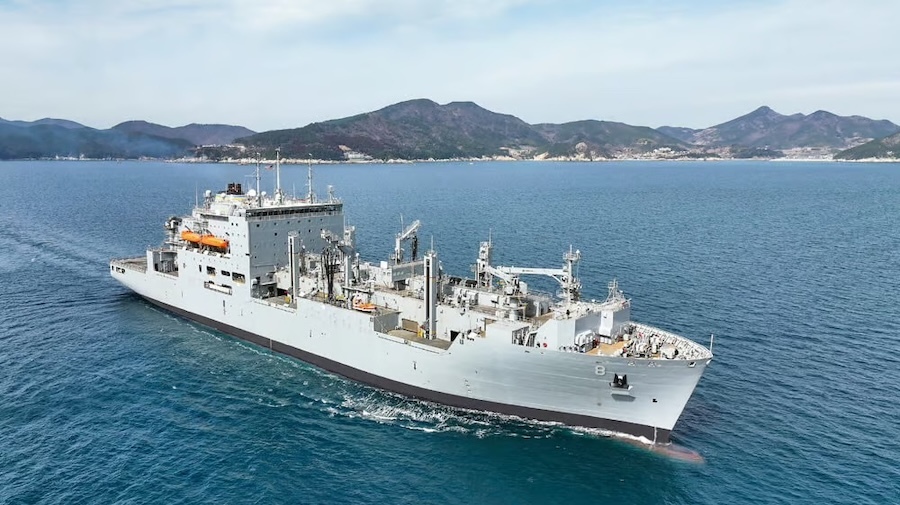
USNS Wally Schirra after a seven-month yard period in South Korea (USN)
Op-Ed: What America Must Change to Make Korean Shipbuilding Matter
Dr. Marcus Jones, The Maritime Executive
Faced with domestic shipyard shortages and China's rapid maritime expansion, the United States is turning to South Korea to help rebuild its naval industrial capacity. However, successfully leveraging Korean capital and production expertise requires the US maritime industry to adopt the behavioral disciplines that enable Korean performance.
- Allied Institutional Framework: The Korea-U.S. Shipbuilding Partnership Initiative (KUSPI) and newly established partnership center provide a formal mechanism to bring Korean capital, modular assembly, and technical expertise into American yards.
- Direct Domestic Investment: Hanwha's acquisition of Philly Shipyard and planned $5 billion upgrade demonstrate how Korean shipbuilders can inject commercial workload and modern infrastructure directly into U.S. facilities.
- Execution Discipline: To successfully leverage Korean expertise, U.S. shipyards and acquisition authorities must adopt strict commercial production behaviors — including front-loaded engineering, high design maturity, protected production sequences, and an aversion to pushing incomplete work downstream for later correction.
- Overseas Maintenance Challenges: Foreign overhauls of U.S. auxiliary vessels revealed procedural friction, where efficient Korean yards inherited immature work packages, missing technical data, and unexpected repair scope.
- Essential Policy Reforms: Long-term success depends on Congress and the Navy establishing clear legal boundaries for foreign construction, stabilizing vessel designs, and protecting production sequences from mid-project changes.
Related: From Strategic Logic to Practical Implementation: A Phased Agenda for U.S.-ROK Shipbuilding Cooperation
Industry

Photo by Abdul Basit via Unsplash
America’s Defense Industrial Base Begins at the Mine
George Meneshian, Small Wars Journal
China has successfully captured a massive share of the world's mineral extraction and refining through state-backed investments and corporate ownership, allowing geopolitical competitors to potentially disrupt American defense production without ever engaging in direct combat. To counter this hidden threat, Washington must look beyond geographical locations and thoroughly evaluate corporate governance, financing structures, and ownership rights.
- Hidden Ownership Risks: Geographic location alone does not guarantee security, as complex private equity structures, debt financing, and indirect corporate governance can quietly give foreign adversaries control over strategic assets.
- Threatened Joint Ventures: Corporate takeover battles over Korea Zinc illustrate how private equity alliances with ties to Chinese state capital can jeopardize vital US-allied initiatives, such as the $7.4 billion federal-backed Crucible Zinc smelter in Tennessee.
- Monopolizing Output Offtakes: Single strategic transactions, such as China's Shenghe Resources acquiring a 20% stake and a 100% output offtake agreement in Tanzania's Peak Rare Earths project, can lock up entire mineral pipelines from mine to market.
Related: Evaluation of U.S. Policies to Increase Domestic Access to Critical Minerals
The New Federation of American Shipyards
Sam LaGrone, USNI News
To address severe construction delays and labor constraints across major warship programs, the U.S. Navy and prime shipbuilders are expanding a "distributed" or "federated" shipbuilding network. By outsourcing structural module fabrication to smaller commercial yards, the Navy aims to expand national manufacturing capacity and accelerate fleet delivery.
- Accelerating Fleet Deliveries: The U.S. Navy plans to increase the share of distributed shipbuilding work from 10 percent to 50 percent, outsourcing module construction away from overburdened primary shipyards to boost overall manufacturing throughput.
- Expanding Submarine Infrastructure: Austal USA invested $450 million in Mobile, Alabama, to construct submarine control room and structural modules that are shrink-wrapped and barged to Electric Boat in Rhode Island for final hull integration.
- Outsourcing Destroyer Modules: HII's Ingalls Shipbuilding is partnering with smaller Gulf Coast fabricators to build up to 37 of the 78 structural blocks required for Arleigh Burke-class destroyers, relieving pressure on its primary yard.
- Leveraging Regional Workforces: Because the American shipbuilding workforce has fallen by 40 percent since the 1970s, prime yards are strategically sending work to where regional workers already reside rather than competing for limited local labor pools
Related: Inside America's $66 billion bet to beat China's shipbuilding empire
Government Reports
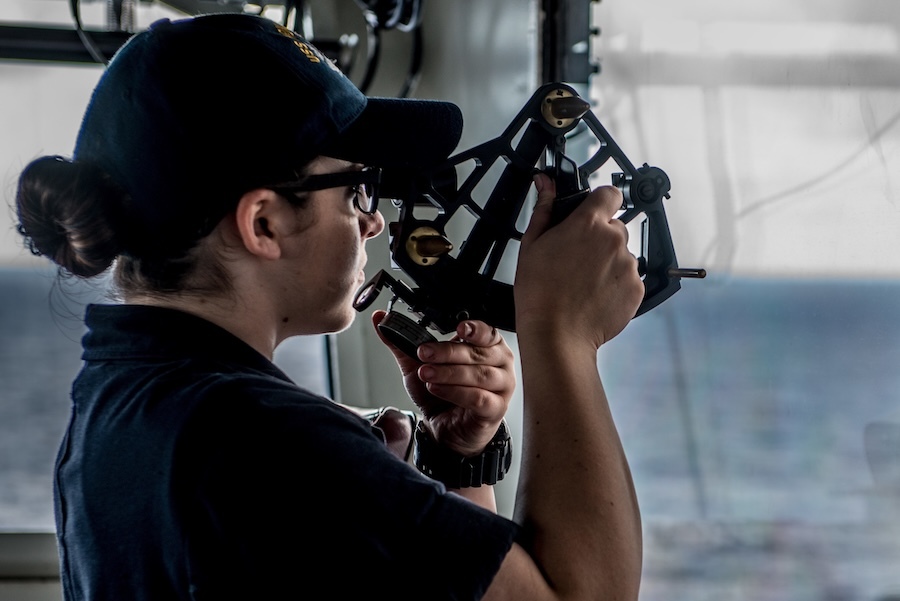
Seaman Recruit Emily Gideon, from San Antonio, uses a stadimeter sextant to measure the distance to the approaching USS Stethem (DDG 63) from the bridge of the Navy's only forward-deployed aircraft carrier, USS Ronald Reagan (CVN 76). (U.S. Navy photo by Petty Officer 3rd Class Nathan Burke/Released)
Precision Navigation Systems: Challenges Remain with Fielding New Capabilities
Government Accountability Office
Defense Contractors, Data Rights, and the “Right to Repair”
Congressional Research Service
The Marine Corps’ Amphibious Combat Vehicle
Congressional Research Service
Research

Captured by a special camera, a laser beam, invisible to the naked eye, shoots across the dark expanse of the David Taylor Model Basin at the Naval Surface Warfare Center in Bethesda, Md., May 23, 2019. (Navy photo by Leonard Pieton)
Rapid Deployment of Airborne Directed Energy Weapons: A Strategic Solution to Evolving Aerial Threats
Ariel Dvorjetski, Naval Postgraduate School
This study evaluates the feasibility of rapidly integrating airborne Directed Energy Weapons (DEWs) to counter evolving aerial threats such as unmanned aerial vehicles (UAVs) and cruise missiles.
The research is based on the hypothesis that high Technology Readiness Level solid-state laser systems can be deployed within a three-year timeframe using tailored acquisition strategies. The methodology combines technology assessment, scenario-based operational modeling, and cost-benefit analysis, alongside evaluation of acquisition frameworks including the Middle Tier of Acquisition. Two operational scenarios—a localized UAV swarm environment and a large-scale missile campaign—are used to assess system effectiveness and scalability.
The findings demonstrate that solid-state laser systems in the 30–50 kW range represent a feasible key performance parameter for near-term airborne integration, enabling effective engagement of high-volume aerial threats while maintaining acceptable size, weight, power, and cooling constraints. Results indicate that power generation and thermal management remain the primary limitations, while cost-per-engagement advantages significantly improve sustainability compared to kinetic interceptors. The study concludes that airborne DEWs are feasible within a three-year timeline when supported by rapid acquisition and phased integration.
Competition under Incomplete Contracts and the Design of Procurement Policies
Rodrigo Carril, Andres Gonzalez-Lira, and Michael S. Walker, American Economic Review
We study the effects of intensifying competition for contracts in the context of US Defense procurement. Leveraging a discontinuous regulation that mandates agencies to publicize certain contract opportunities, we document that expanding the set of bidders reduces award prices but deteriorates post-award performance in terms of cost overruns and delays. We develop and estimate an auction model with endogenous entry and stochastic execution performance, in which the buyer endogenously chooses the intensity of competition. Model estimates indicate substantial heterogeneity in performance across contractors and show that simple adjustments to the current regulation could provide significant savings in procurement spending.
The Adaptive Acquisition Framework: Five years later
David K. Kuroda, Defense Acquisition Research Journal
This study finds that although the Department of War (DoW)’s 2020 Adaptive Acquisition Framework (AAF) sought to modernize governance through tailored pathways, the results show uneven outcomes. The DoW intended to modernize governance through improved flexibility, reduced time-to-fielding, and streamlined oversight through two software acquisition pathways: program-level data from the DoW’s ADVANA, an Advanced Analytics platform, and DAVE, a Defense Acquisition Visibility Environment.
These Software Acquisition Pathway programs show mixed release-tempo results, with some evidence of shorter release cycles but no uniform pattern of improvement across the pathway; Middle Tier of Acquisition programs still face transition and maturity challenges; and Defense Business Systems’ efforts show extended sustainment and slow modernization. No measurable change in Nunn-McCurdy breach trends for Major Capability Acquisition programs is evident post-AAF, highlighting persistent cost behaviors. Thus, while pathway flexibility offers some value, systemic institutional barriers continue to constrain reform outcomes. To address the gaps identified in this analysis, the author recommends unified performance metrics, tighter entry criteria, and enhanced life-cycle reporting to improve evaluation of acquisition reforms.
Events
DEFCON
Stanford University
7 October 2026
Palo Alto, CA
AUSA Annual Meeting & Exposition
Association of the United States Army
12-14 October 2026
Washington, DC
TechNet Indo-Pacific 2026
AFCEA
26-29 October 2026
Honolulu, HI
Ironclad Maritime Summit
27 October 2026
Norfolk, VA
Silicon Valley Space Week
SatNews
27-29 October 2026
Mountain View, CA
Defense Conference 26: Operationalizing Acquisition for the Warfighter
Professional Services Council
30 October 2026
Crystal City, VA & Online
One more thing...
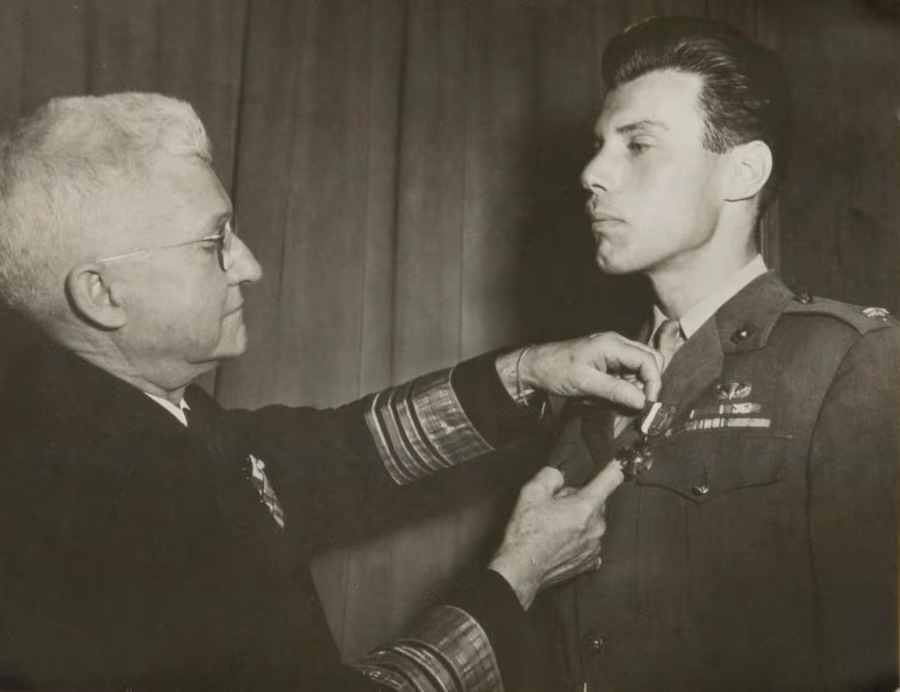
Peter Ortiz presented with his first Navy Cross on July 6, 1944. (U.S. Marine Corps, courtesy of Marine Corps History Division)
Marine, actor, spy: ‘Ortiz’s War’ depicts pursuits of World War II commando
Claire Barrett, Navy Times
In the book "Ortiz's War," authors Katie S. Sanders and Nicholas Reynolds chronicle the legendary life of Peter Ortiz, a decorated Marine Corps officer and OSS commando who parachuted behind enemy lines in Nazi-occupied France to arm the resistance, boost local morale, and eventually save downed American airmen like Sanders' grandfather.
- Uncovering Forgotten Lore: Journalist Katie Sanders began researching Ortiz after discovering her grandfather’s WWII artifacts and a 1949 television clip linking him to the commando.
- Multifaceted WWII Legend: Peter Ortiz lived an extraordinary life as a French Legionnaire, Marine Corps officer, OSS spy, prisoner of war, and Hollywood actor.
- Arming French Resistance: As one of only 80 Marines in the OSS, Ortiz parachuted into occupied France to evaluate, organize, and supply weapons to the Maquis resistance movement.
- Boosting Local Morale: Ortiz deliberately wore his U.S. Marine Corps uniform in occupied territory to provide symbolic hope and morale to French resistance fighters.
- Rescuing Downed Aviators: Codenamed "Chambellan," Ortiz helped guide downed Allied airmen, including Sanders' Jewish grandfather, through occupied territory to safety over the Pyrenees.
- Selfless Surrender Decision: Overrun by several hundred German troops near Albertville in August 1944, Ortiz surrendered his team to prevent enemy reprisals on a local French village.
- Hollywood Ending: Following multiple escape attempts as a POW and his liberation in 1945, Ortiz pursued a post-war career acting in Hollywood films.
|