Acquisition
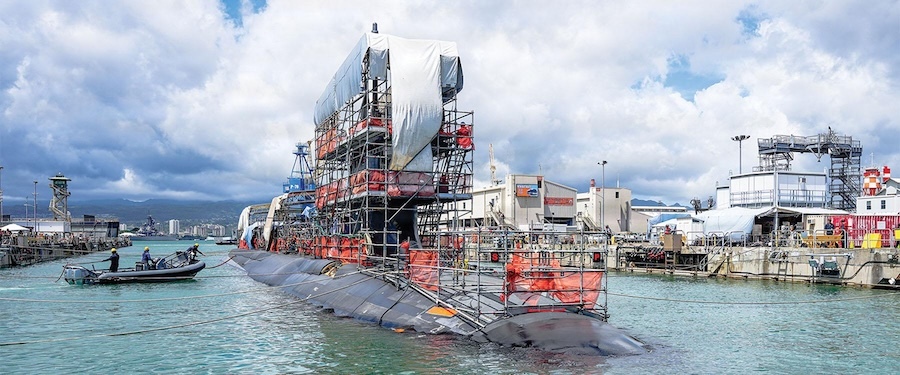
The Virginia-class fast-attack submarine USS Illinois (SSN-786) prepares to undock at Pearl Harbor Naval Shipyard and Intermediate Maintenance Facility in June. More consideration needs to be given to how artificial intelligence can be used to reduce bureaucratic and administrative burdens for Navy ships in maintenance availabilities.(U.S. Navy by Camey Streff)
AI Can Shorten Shipyard Periods
Lieutenant Commander Benjamin McFarland, USN, Proceedings
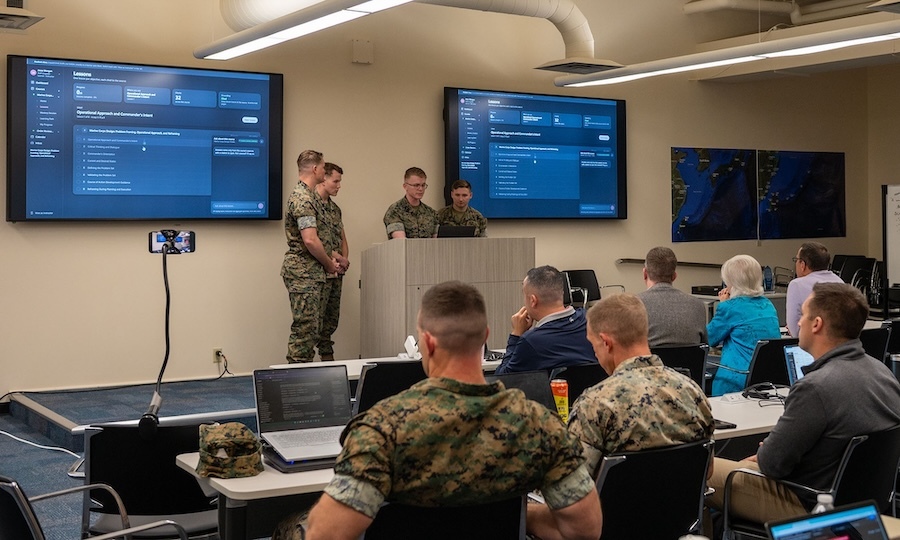
Applying artificial intelligence to the U.S. Navy's equipment tagout process can drastically reduce administrative delays during ship maintenance availabilities. Replacing human review bottlenecks with AI-assisted verification can accelerate repair cycles, eliminate human error, and enhance fleet warfighting readiness.
- Persistent Shipyard Delays: Unplanned work and personnel shortages result in on-time shipyard completion rates below 40%, while long-term infrastructure improvements offer only gradual relief.
- Laborious Tagout Process: Equipment isolation requires sifting through paper schematics and completing three independent verifications, taking up to three days for ship crews and over a week when coordinating with private shipyards.
- Administrative Bottlenecks: Assistant Authorizing Officers (AAOs) serve as major operational bottlenecks due to heavy workloads and collateral duties that force tagout reviews into after-hours work.
- AI-Assisted Verification: Deploying an assistant authorizing AI to automate tagout checks minimizes human error and significantly accelerates safety isolation reviews.
- Digitizing Ship Schematics: Converting scanned paper schematics into digital formats allows AI models to quickly analyze complex system diagrams and determine all required equipment isolations.
- Phased Implementation Model: Establishing a joint AI work controls cell enables side-by-side testing against human tagouts, building algorithmic reliability before gradually reducing humans in the loop.
- Streamlining Unplanned Work: AI tagout generation compresses preparation time for unplanned maintenance and failed test reworks from a full week down to a few hours.
The Pentagon’s drone revolution: inside the new DRPM-UxS office dismantling military bureaucracy
sUAS News
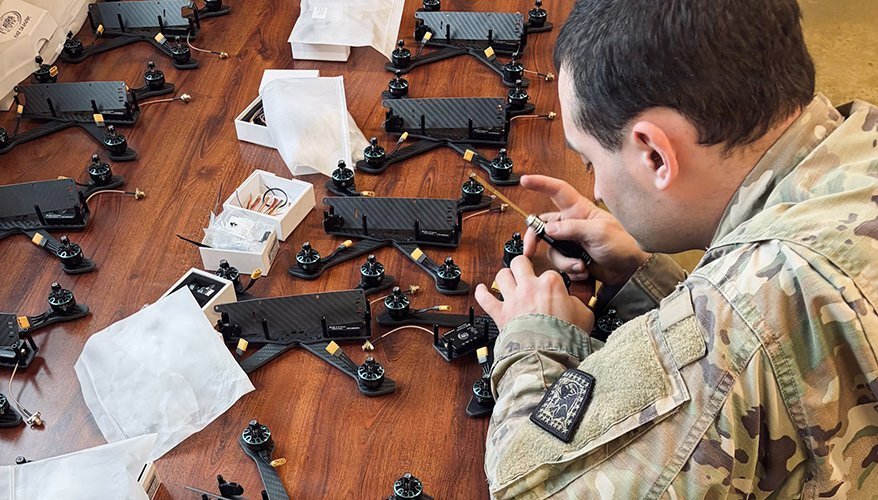
Led by Bonnie Evangelista, the new Direct Reporting Portfolio Manager for Unmanned Systems (DRPM-UxS) aims to rapidly field low-cost, adaptable autonomous technology directly to frontline warfighters
- Bureaucratic Overhaul: Formed under Defense Secretary Pete Hegseth's "Project Agincourt," DRPM-UxS holds direct-reporting status that bypasses intermediate administrative layers across the Army, Navy, and Air Force to accelerate drone procurement.
- Repeatable Systems: Rather than purchasing a single static drone platform, the initiative focuses on building a repeatable procurement framework that delegates capital and decision-making authority directly to operational warfighters.
- Proven Reformer: Bonnie Evangelista brings a 17-year track record of challenging military procurement models, having previously co-founded the Tradewinds Solutions Marketplace to evaluate short commercial video pitches.
- Agile Workflows: In previous roles, Evangelista replaced overly prescriptive technical requirements with plain-language problem statements, pioneering generative AI tools to translate warfighter feedback into contract-ready descriptions in just 30 minutes.
- Future Command: DRPM-UxS lays the operational foundation for a proposed four-star Autonomous Warfare Command by October 2027, while enforcing strict cyber standards and bans on foreign-manufactured components.
Related: Solving the Pentagon’s Acquisition Puzzle
Innovation
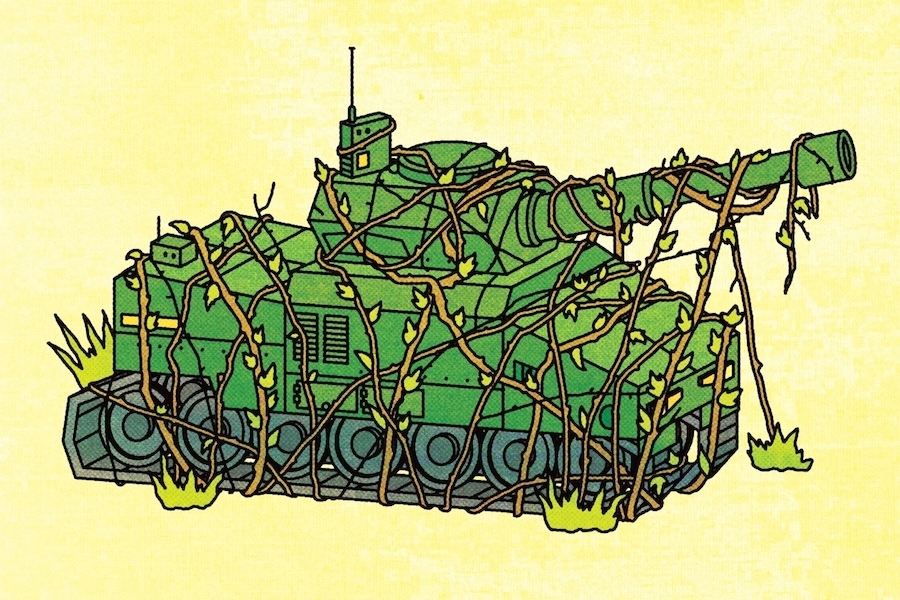
Image credit: George Wylesol (wylesol.com) via Foreign Affairs
America’s Missing Military Revolution: Why Washington Still Risks Losing the Tech Race
Doug Beck, Foreign Affairs
Former Defense Innovation Unit (DIU) Director Doug Beck argues that the Pentagon's outdated, risk-averse acquisition system threatens U.S. military superiority against near-peer adversaries like China. To maintain strategic technological readiness, Washington must scale flexible procurement authorities, streamline hiring, and realign risk incentives across government and the commercial sector.
- Obsolescence by Design: The Defense Department’s multi-year testing and budgeting processes take so long to field software and autonomous systems that technologies are already outdated upon delivery.
- Risk-Averse Bureaucracy: Strict regulations and fear of congressional inquiries incentivize procurement staff to prioritize process compliance over operational outcomes, locking out fast-moving commercial innovators.
- Dedicated Tech Budgets: Congress should allocate 20 percent of service research and procurement budgets to flexible portfolios—such as AI and autonomous systems—allowing rapid pivot-and-scale authority paired with real-time transparency.
- Fast-Tracking Tech Talent: Overhauling slow, multi-month hiring cycles and establishing clear career pathways for personnel fluent in both commercial tech and warfighting are essential to retaining expertise.
- Realigning Risk Incentives: Achieving systemic defense reform requires changing performance evaluations to reward calculated risk-taking, encouraging Silicon Valley-style rapid iteration and healthy market competition.
Related: AI, hypersonics and the future of defence innovation with Doug Beck
Army’s Project Gatekeeper aims to cut software approval times from months to ‘minutes’
Sydney J. Freedberg Jr., Breaking Defense
The U.S. Army is launching Project Gatekeeper, an AI-enhanced cybersecurity testing sandbox running on the Army's cloud, to streamline commercial software clearance for military networks.
- Accelerated Vetting Timeline: Activating on October 23, Project Gatekeeper creates a cloud-based sandbox that reduces software approval times from months — up to nine months under legacy processes — to mere minutes.
- Isolated Testing Sandbox: The system provides a secure, isolated testing environment on the Army's cloud where commercial vendors can assess software without requiring an active Army contract or program manager sponsorship.
- Automated Security Feedback: Commercial developers upload code to run against automated cybersecurity tools and AI assessments, receiving an immediate pass mark or detailed, actionable feedback to fix vulnerabilities.
- Eliminating Process Bottlenecks: Gatekeeper replaces a fragmented system where individual program offices — lacking the technical capability or willingness to review unfamiliar code — waited until another organization had granted a new vendor an Authority To Operate (ATO).
- Expanding Commercial Access: The platform will remove common access card (CAC) requirements by integrating GSA's Login.gov platform by mid-November, making cybersecurity testing broadly accessible to commercial innovators.
Industry

Image: Wendy Hallmark via Naval Sea Systems Command
The Navy’s Missing Welders Are Stocking Shelves
Michael Gilroy, War on the Rocks
Despite recent wage increases, U.S. Navy shipyards face a severe 174,000-worker shortage. Current recruiting methods fail to attract low-wage workers in unrelated fields, such as retail or fast food, who cannot afford to quit their jobs and go without pay during training. To bridge this financial gap, the author proposes that the Navy should reallocate advertising funds toward paid training stipends and utilize regional intermediaries to connect local businesses with prospective workers.
- Unreachable Wage Jump: Entry-level shipyard welders start near $57,000 compared to retail cashier wages of $33,000, but low-income workers cannot afford unpaid months of training to transition.
- Missing Industry Brokers: No regional intermediary currently exists to organize paid shifts, screen applicants, and absorb placement risks for small- and mid-tier suppliers.
- Inflexible Academic Models: Community colleges depend on full-time student counts for state funding, discouraging them from offering flexible early-morning classes for working adults.
- Incentivizing Wage Bridges: Federal Workforce Pell covers tuition but leaves living expenses unfunded; reallocating a portion of the Navy's $100 million advertising budget would provide direct training stipends.
- Tracking True Recruitment: Implementing reporting rules that evaluate prior-year earnings will show whether programs reach low-wage workers instead of poaching existing trade workers.
As private investment in defense increases, some bottlenecks in funding: AIA-Bain
Valerie Insinna, Breaking Defense
Defense market capitalization has doubled to $1.6 trillion and venture capital funding grew ten-fold from $1 billion in 2019 to $10 billion in 2025, but critical bottlenecks in sub-tier manufacturing, raw materials, and middle-stage production funding remain severely underfunded.
- Sub-Tier Supply Bottlenecks: Lower-tier suppliers producing critical components—such as solid rocket motors, castings, energetics, and semiconductors—face severe capital access limits and workforce constraints when attempting to rapidly expand production capacity.
- Production Transition Void: A major funding gap exists between high-risk early R&D (favored by venture capital) and low-risk mature manufacturing (favored by private equity), leaving mid-stage technologies without a fit-for-purpose investment model.
- Long-Term Demand Signals: Small and mid-tier suppliers depend on firm multiyear contracts and reliable demand forecasts from the Pentagon to justify long-term capital investments in facilities, equipment, and workforce training.
Government Reports

Image by ChatGPT
Artificial Intelligence: Actions and Opportunities to Implement Responsible Use in DOD
Government Accountability Office
U.S. Aircraft Combat Losses in Operation Epic Fury: Considerations for Congress
Congressional Research Service
U.S. Military Operations Against Iran: Munitions and Missile Defense
Congressional Research Service
Research

A Naval Postgraduate School (NPS) student operates the NVIDIA Omniverse simulation framework during Converge @ NPS, July 23, 2026. NPS uses NVIDIA Omniverse to support digital twins, simulation and visualization, enabling researchers to model and evaluate complex operational scenarios in collaborative virtual environments. (NPS Photo by Petty Officer 2nd Class Abreen Padeken)
Digital Twins and Predictive Sustainment: Readiness Gains, Inventory Effects, and Performance-Based Logistics Alignment
Seth Deaton & Bryen Roder, Naval Postgraduate School
This research explores how bureau-number-specific digital twins, powered by predictive analytics and AI-enabled logistics, can transform U.S. Marine Corps H-1 sustainment from a reactive process into a strategic readiness advantage. Using existing aviation maintenance and readiness data, the study proposes a Minimum Viable Digital Twin framework that integrates aircraft health, maintenance, and supply-chain information to forecast failures, improve mission-capable rates, and strengthen performance-based logistics decisions. The findings outline a practical pathway toward intelligent sustainment ecosystems that could reshape not only H-1 readiness, but the future of Department of Defense aviation logistics as a whole.
Optimizing Aviation Life Support System Process Efficiency through Standardized Maintenance Practices within Intermediate-Level Fleet Readiness Centers
Dylan Caparo, Naval Postgraduate School
Aviation life support systems (ALSS) represent a life-critical domain within naval aviation, yet components frequently exhibit a time to reliably replenish (TRR) variance greater than 1.0, signifying severe maintenance delays. The purpose of this research is to create a quantitative framework to identify the primary drivers contributing to these TRR overruns. The results indicate that inadequate supply chains (awaiting parts) and internal work center backlogs (awaiting maintenance) are the most significant bottlenecks across all analyzed parachute assemblies. The study concludes that systemic delays are fueled by a combination of supply chain constraints, internal process friction, and outdated administrative standards. To reduce TRR and enhance fleet readiness, this study recommends establishing data-driven pre-expended bins (PEB), re-baselining specific TRR task standards, and implementing a lean-inspired tiered workload management system.
Workable competition in monopsony markets: U.S. defense industrial consolidation
Jomana H. Amara and Brig Gen Raymond E. Franck, USAF (Ret.), Defense Acquisition Research Journal
This article examines competition and consolidation in the U.S. Defense Industrial Base (DIB), challenging the assumption that more suppliers necessarily produce better acquisition outcomes and arguing that “workable competition” – a sufficient number of capable, stable rivals – is a more useful standard than the number of firms alone. Because the federal government is both the principal buyer and the maker of the market’s rules, its own acquisition policies have helped shape the DIB’s current limitations. The article concludes that the DIB remains workably competitive despite weaknesses in supply chains, capacity, infrastructure, and human capital. Adding suppliers may produce diminishing benefits while increasing the risks of unrealistic proposals, protests, delays, and program failure. The authors recommend further research to determine the optimum number and mix of capable, resilient, and innovative suppliers in different defense-market segments.
Events
TechNet Indo-Pacific 2026
AFCEA
26-29 October 2026
Honolulu, HI
Ironclad Maritime Summit
27 October 2026
Norfolk, VA
Silicon Valley Space Week
SatNews
27-29 October 2026
Mountain View, CA
Portfolios Not Programs: Transitioning to the New Paradigm
Warfighting Acquisition University
28 October 2026
Virtual
Defense Conference 26: Operationalizing Acquisition for the Warfighter
Professional Services Council
30 October 2026
Crystal City, VA & Online
One more thing...

The USS Arizona Memorial is seen before the 84th anniversary of the attack on Pearl Harbor, Sunday, Dec. 7, 2025, in Honolulu. (AP Photo/Mengshin Lin)
‘Unknown’ sailors and Marines from the battleship Arizona to be disinterred Dec. 7
Richard Sisk, Navy Times
On December 7, 2026, the Defense Department will begin exhuming 86 "Unknown" sailors and Marines from the USS Arizona buried at Honolulu's National Memorial Cemetery of the Pacific.
- Devastating Ship Loss: The bombing of the USS Arizona claimed 1,177 lives, representing nearly half of the 2,403 total American casualties suffered during the Pearl Harbor attack.
- Historic Exhumation Effort: The Defense POW/MIA Accounting Agency (DPAA) will disinter 86 caskets of unidentified USS Arizona crew members from the National Cemetery of the Pacific, known as the "Punchbowl".
- Anniversary Launch Date: Exhumations will begin on December 7, 2026 — the 85th anniversary of the Pearl Harbor attack — starting with eight caskets and proceeding at approximately eight per week until complete.
- Grassroots Family Leadership: The disinterment initiative was propelled by Operation 85, a family-led organization founded by Kevin Kline, the grandnephew of a fallen Arizona gunner's mate.
- Overcoming Institutional Barriers: Operation 85 independently collected DNA Family Reference Samples from surviving relatives after military officials initially dismissed the identification project as too difficult and costly.
- Key DNA Threshold: Disinterments received official approval after Operation 85 successfully reached a 60% threshold of family DNA reference samples needed for forensic identification.
- Ongoing Family Outreach: DPAA and Operation 85 continue seeking DNA samples from relatives of missing crew members to ensure every possible unknown grave marker can be replaced with a named headstone.
- Entombed Shipmates: While 86 unknowns are being exhumed for identification, more than 900 fallen sailors and Marines remain permanently entombed within the sunken hull of the USS Arizona Memorial.
|