
Colloquia - Physics
Upcoming Colloquia
There are no upcoming events. Check back soon for future events.
Past Colloquia
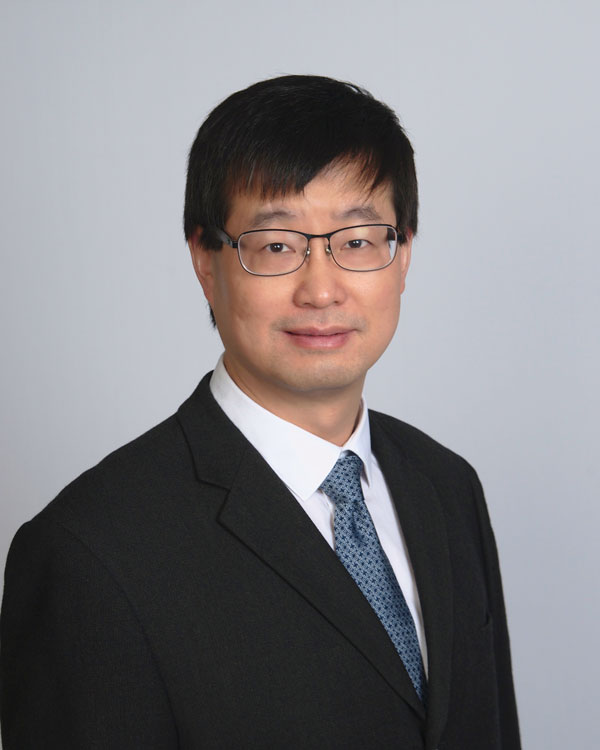
Engineering a quantum frontier for atomic clocks and fundamental physics
- Speaker: Dr. Jun Ye
- Date: May 31, 2024
- Time: 11:00
- Location: Spanagel 117
Abstract: Quantum state engineering, many-body physics, and laser technology are helping to increase the size of coherent quantum systems and revolutionize the performance of atomic clocks and metrology. A quantum gas of strontium atoms loaded into arrays of optical traps represents such a system that combines the best measurement precision and accuracy. Recent advances include precise engineering of a spin Hamiltonian to achieve a record clock accuracy, determination of the gravitational time dilation across a few hundred micrometers, and employment and verification of spin entanglement for clock comparison. These progresses in quantum metrology provide new insights into dynamical phases of matter, and raise the prospect of using the next generation of clocks to search for new physics beyond the minimal standard model and probe the interface of gravity and quantum mechanics.
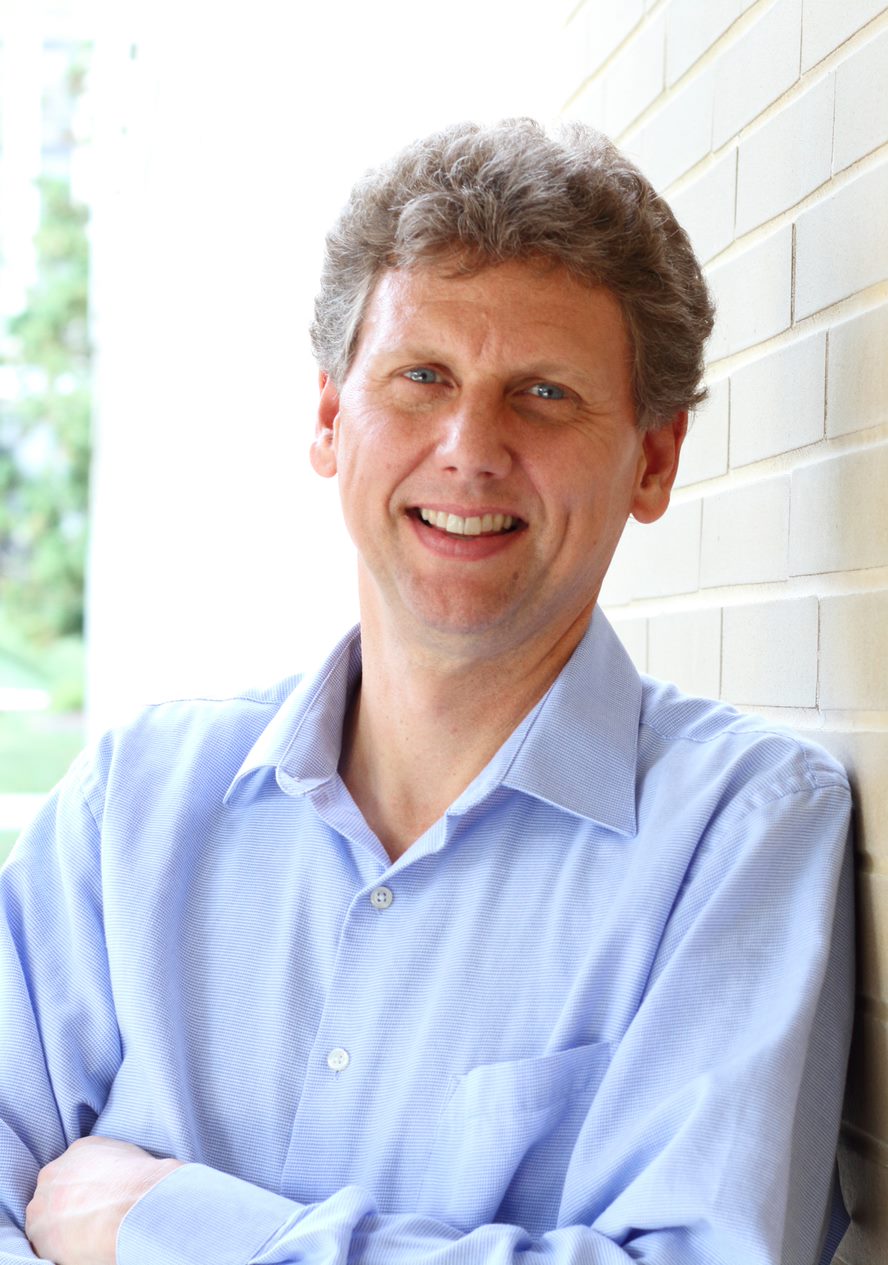
Atomic Clocks
- Speaker: Dr. Kurt Gibble
- Date: May 17, 2024
- Time: 11:00
- Location: Spanagel 117
Abstract: Atomic clocks realize the most accurate measurements of any physical observable, determining the frequencies of atomic transitions to a part in 1018. They exploit the high-coherence central to atomic physics that underlies many applications, from clocks and atom interferometry to quantum information processing. I will describe how atomic clocks tick and discuss several general interest physics aspects of modern microwave and optical frequency atomic clocks. These include quantum mechanical collisions at microKelvin temperatures, frequency shifts due to microwave photon recoils, laser-cooling of cadmium for optical lattice clocks, tests of Beyond Standard Model physics using isotope shifts, and tests of general relativity with orbiting atomic clocks.
Understanding ocean-sea interactions during tropical cyclones using passive acoustic monitoring: Gulf of Mexico case study
- Speaker: Dr. Natalia Sidorovskaia
- Date: Apr 19, 2024
- Time: 11:00
- Location: Spanagel 117
Abstract: Air-sea interaction processes define many prominent features of the acoustic ambient noise spectrum in the ocean (Wenz, 1962). Therefore, underwater acoustic field measurements have demonstrated a substantial potential in monitoring wind speed over the ocean. Shaw et al. (1978) pioneered the field by establishing a linear relationship between the underwater sound pressure levels and the logarithm of low to moderate local wind speeds. Later, Wilson and Makris (2006) further advanced the theory by proposing a parameterized acoustic notional surface source model specifically designed to estimate high wind speeds during tropical cyclones. However, even in the Gulf of Mexico region, that is heavily impacted by hurricanes, acoustic data input is not routinely used to track cyclones’ wind speeds. The talk will discuss several approaches to the analysis of the acoustic data collected by the bottom-anchored passive acoustic monitoring system during storm Barry (2019) in the Gulf of Mexico to estimate local wind speeds. The estimated wind speeds are compared to the high-resolution ones generated by the Weather Research and Forecast model. Recently, underwater gliders equipped with passive acoustic systems in addition to traditional set of environmental sensors have been emerging as a new tool for understanding the marine conditions that influence the onset and amplification of tropical cyclones. In this context acoustic data could aid in refining wind strength forecasting, thereby aiding in high spatial resolution wind mapping during hurricanes. Fully autonomous glider’s reconnaissance may also offer a new type of field data (acoustic) to integrate into the operational weather forecasting models used by NOAA and U.S. NAVY for more reliable cyclone strength prediction. [Research supported by the Office of the Under Secretary of Defense for Research and Engineering, award# FA9550-21-1-0215]
Tabletop particle physics and cosmology with precision quantum-logic spectroscopy
- Speaker: David Leibrandt
- Date: Apr 05, 2024
- Time: 11:00
- Location: Spanagel Hall Room 117
Abstract: The extreme precision and accuracy of state-of-the-art optical atomic clocks can be used to look for very small deviations from the predictions of the Standard Model, offering a tool to search for beyond Standard Model (BSM) physics complementary to particle accelerators. These searches are based on measuring the frequency ratio of two transitions that depend differently on interactions with BSM particles or fields. In this talk, I will begin with a brief review of optical atomic clocks, focusing on clocks based on quantum-logic spectroscopy of Al+. I will proceed to present a frequency ratio measurement between Al+ and Yb clocks at NIST that used a new coherent clock comparison protocol called differential spectroscopy in order to achieve the highest precision of any interspecies ratio measurement to date. I will conclude with a discussion of two new experiments being set up at UCLA aimed at performing precision quantum-logic spectroscopy of transitions with much higher sensitivity to BSM physics in a variety of sectors. In the first, precision measurements of the 149 nm nuclear isomer transition in sympathetically laser cooled 229Th3+ ions will be used to search for proposed ultralight scalar dark matter models such as the relaxion and for time-variation of the fundamental constants predicted by theories that seek to unify general relativity with quantum mechanics. In the second, quantum control and quantum-logic spectroscopy of polyatomic molecules will be used to study and search for fundamental symmetry violations in the weak and strong force sectors.
Experimental Investigation of Flow Noise
- Speaker: Alex Skvortsov
- Date: Mar 18, 2024
- Time: 15:00
- Location: Spanagel Hall Room 117
Abstract: Flow noise (i.e., acoustic noise generated by turbulent flow) is one of the major sources of noise of naval platforms and remains one of the main challenges for acoustic signature management (due to ever-increasing operational speed and reduction of noise level generated by other sources). It has been well recognised that a simple yet reliable prediction methods of flow noise at the initial stage of the future underwater platforms design and development is a critical success factor for large acquisition projects.
Any experimental study of flow noise is a rather difficult and often expensive undertaking involving complex large-scale experimental facilities. This is due to the fact that this phenomenon is often masked by extraneous noise entering or generated by the experimental facility.
We present a review of our recent experimental investigation of flow noise with a small-scale buoyancy driven model in DST Group’s Large Water Tank and in the acoustic enclosure in DST Group’s Wind tunnel. The uncertainties associated with the upscaling procedure for the results of small-scale modelling are also discussed. The talk is intended for a general audience.
Resonance
- Speaker: Lawrie Virgin
- Date: Mar 15, 2024
- Time: 11:00
- Location: Spanagel Hall Room 117
Abstract: The phenomenon of resonance underlies a myriad of important features (both desirable and unwanted) across physics and engineering. This talk will present a brief survey of examples followed by a couple of recent developments. The first involves the use of 3D-printing to illustrate sympathetic resonance – via a useful teaching tool. The second concerns the prediction of critical speeds (a resonant condition) in rotation shafts – an example of non-destructive testing. The talk is intended for a general audience.
Testing relativity on a tabletop with a miniature network of optical lattice atomic clocks
- Speaker: Shimon Kolkowitz
- Date: Feb 16, 2024
- Time: 11:00
- Location: Spanagel Room 117
Abstract: The remarkable precision of optical atomic clocks offers sensitivity to new and exotic physics through tests of relativity, searches for dark matter, gravitational wave detection, and probes for beyond Standard Model particles. While much of optical clock research has focused on improving their absolute accuracy, many searches for new physics can be performed with relative comparisons between clocks. To this end, we have recently realized a “multiplexed” strontium optical lattice clock consisting of two or more clocks in one vacuum chamber, forming a miniature clock network. This enables us to bypass the primary limitations to typical atomic clock comparisons and to achieve new levels of precision.
In this talk I will explain the motivation, concept, and operating principles of our multiplexed optical lattice clock. I will then present recent experimental results in which we performed a novel, blinded, precision test of the gravitational redshift with a vertical array of 5 evenly-spaced ensembles of ultra-cold strontium atoms spanning a total height difference of 1 cm. I will present the error budget produced from our systematic evaluation, and the unblinded results of our first test. I will explain how these results can also be viewed as proof-of-principle measurements of relativistic gravitational potential differences at the millimeter scale, with applications to geodesy. Finally, I will discuss the outlook for using our apparatus for future searches for new physics, including a novel direct test of the Einstein Equivalence Principle, and explorations of the interplay between general relativity and quantum mechanics.
Overcoming Challenges to Escalation Management in Limited Exchange Scenarios
- Speaker: Dr. Joseph Wasem
- Date: Feb 09, 2024
- Time: 11:00
- Location: Spanagel Hall Room 117
Note: Classification Level: SFRD. This talk will be classified Secret.
Abstract: While Cold War deterrence scenarios often revolved around large-scale nuclear exchanges between the US and the Soviet Union, the new multipolar scenario is more likely to have to deal with limited exchange scenarios born out of ongoing regional and/or theater conventional conflict. To make the situation even more complex, these situations may now also arise in the context of two peer competitors as opposed to the single peer competitor faced during the Cold War. From this backdrop a new series of deterrence scenarios and attendant challenges arise, requiring different thinking at both the policy/strategy level as well as different options generated from the weapons technical community. This talk will explore this interaction between policy/strategy and technical options, including several options that go beyond the typical technical developments the nuclear security enterprise has focused on during recent decades.
Driving Innovation in Electro-Optic and Photonic Materials
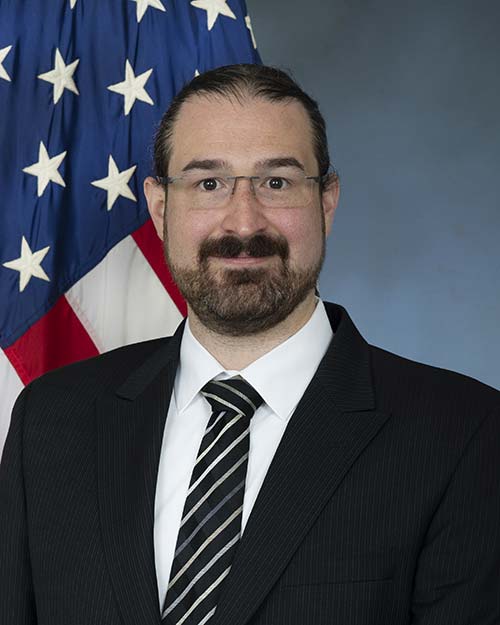
- Speaker: Olivia M. Pavlic and Gregory T. Forcherio
- Date: Feb 02, 2024
- Time: 11:00
- Location: Spanagel Hall Room 117
Abstract: Development of new optoelectronic materials and architectures is required to drive innovation in photonic sensing, particularly those that expand our ability to see through degraded atmospherics and support real-time processing. This talk will overview efforts at Crane to develop multiphysics models of low-dimensional materials, such as quantum nanocrystals, as novel infrared focal planes and design novel imaging optics using, e.g., dielectric metasurfaces. Opportunities for faculty and student engagement with NSWC Crane will be highlighted.
Thin Film Lithium Niobate Photonic Integrated Circuits
- Speaker: Dashiell L. P. Vitullo, Ph.D.
- Date: Jan 26, 2024
- Time: 11:00
- Location: Spanagel Hall Room 117
Thin film lithium niobate (TFLN) photonic integrated circuits offer several improvements over other platforms in terms of material loss, energy efficiency, and operational bandwidth, making them promising enablers for high data rate optical communication. We review our recent demonstration of quadrature phase shift keying in an ultrasmall TFLN photonic crystal-based IQ modulator. Our modulator features a footprint of 40 × 200 μm2 along with quality factors approaching 105 providing it with a Vπ = 1.16 V [H. Larocque et al. CLEO 2023, paper STh1R.3; H. Larocque et al. arXiv:2312.16746]. We discuss an extension to and optimization of quadrature amplitude modulation encoding schemes tailored to the device’s voltage response, including the use of a deep neural network for streamlining bit error rate minimization.
Superconducting magnetic energy storage (SMES) for the Navy
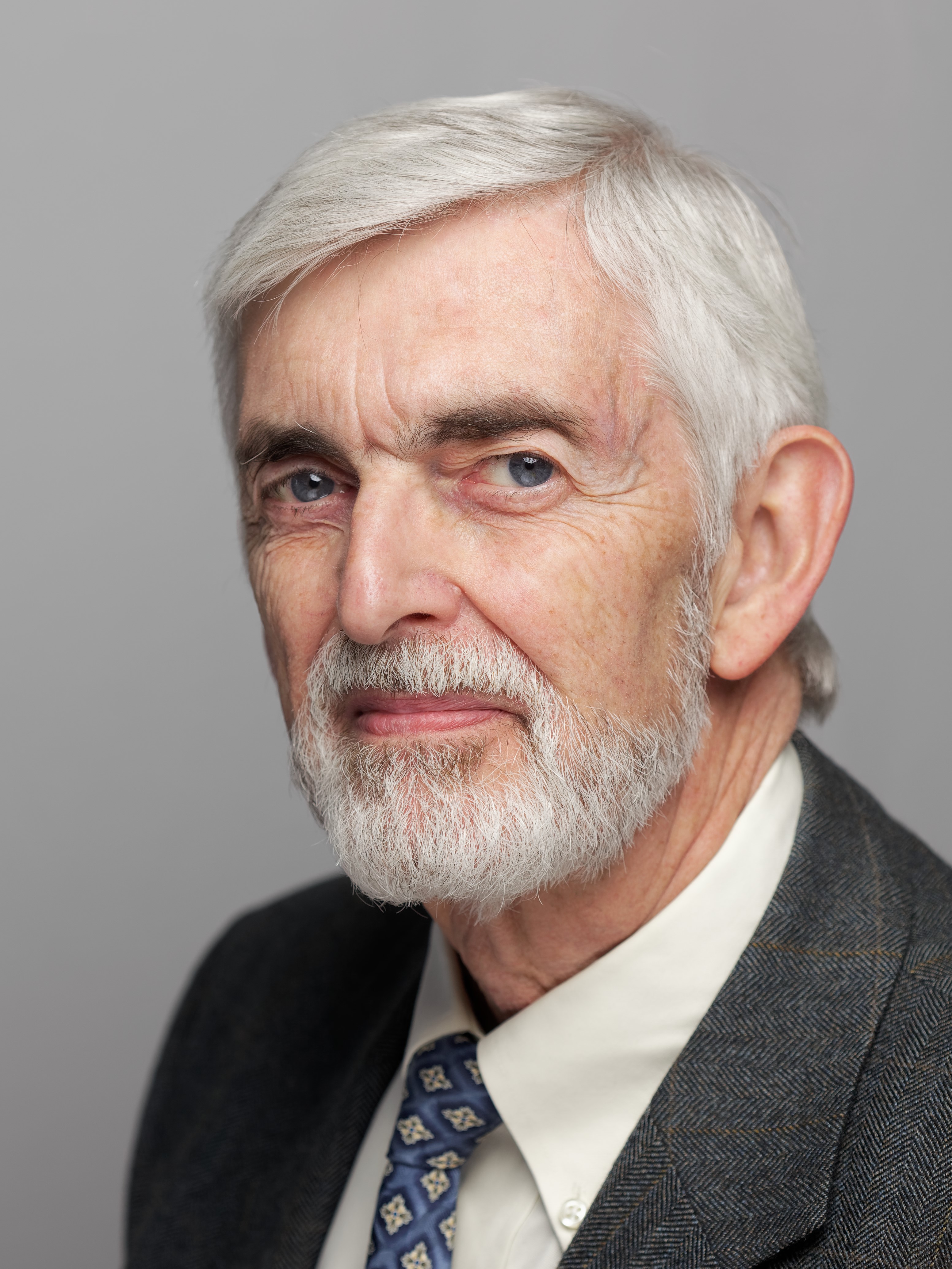
- Speaker: Ian R. McNab
- Date: Dec 01, 2023
- Time: 12:00
- Location: Spanagel Hall Room 117
The storage of electrical energy, and its delivery as power pulses, plays an important and growing role in many Navy applications. These include stabilization of electrical grids and high-power sources for radars, lasers, microwaves, electromagnetic launch of aircraft or missiles, and railguns. Navy requirements are at sea, land, air, space, under sea, and for expeditionary forces, some of which in common with Army, Air Force, and Space Command missions.
Quantum Computing with Superconducting Qubits
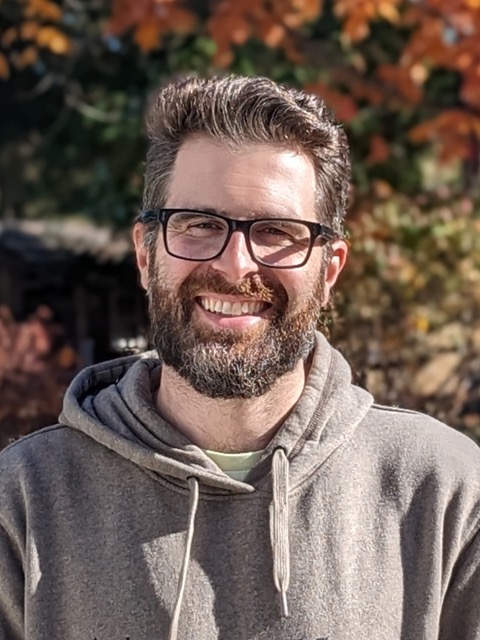
- Speaker: Josh Mutus
- Date: Oct 20, 2023
- Time: 12:00
- Location: Spanagel Hall Room 117
What is a quantum computer and what might it be useful for? I'll describe how a quantum computer, based on superconducting qubits, works. I'll also describe fault tolerant quantum computing (FTQC), and the applications where a quantum computer might vastly outperform even the largest high performance computing facility. What might such "utility-scale" quantum computer look like and how big would it have to be to solve problems intractable on today's machines?